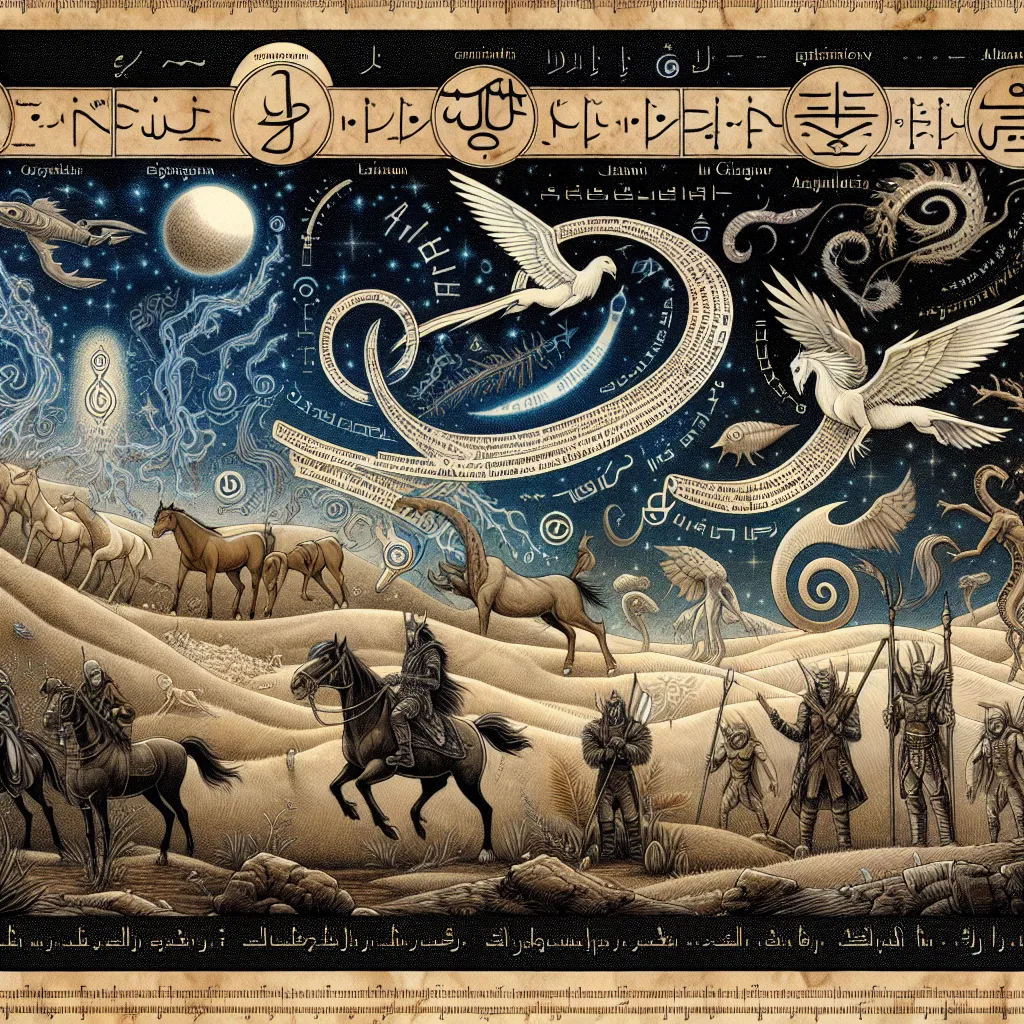
One of the coolest aspects of “Game of Thrones” is the Dothraki language. It’s fascinating to think that a fictional world can have its own real language. This trend isn’t new; “Avatar” had the Na’vi language, and before that, “Star Trek” featured Klingon. Of course, we can’t forget the granddaddy of them all: J.R.R. Tolkien’s Elvish from “The Lord of the Rings.” Tolkien was a pioneer in creating these constructed languages, or “conlangs,” as they’re called.
Conlangs aren’t just gibberish. They’re real languages with their own words and grammar. Sure, having a vast vocabulary helps—Dothraki has thousands of words, and Na’vi started with around 1,500. But a real language is more than just words; it’s about how those words fit together, how the language has rules and structure. In English, for instance, we make a verb past tense by adding “-ed” at the end. It’s the same with conlangs. In Elvish, “wash” becomes “allune” for the past tense.
Languages evolve over time, and conlangs do too. Just look at how English has changed from Old English to what we speak today. Similarly, Tolkien made sure that Elvish evolved in his fictional world. Different groups of Elves developed their own dialects, just as Latin splintered into French, Spanish, and Italian. Words transformed through the ages, spreading into different variations across Middle Earth.
Tolkien’s Elvish isn’t a chaotic mishmash; it’s full of complexities and irregularities, just like real languages. For example, in English, we have verbs that don’t follow regular rules—think “know” and “knew.” Elvish has its quirks too: “know” is “ista,” but “knew” is “sinte.”
However, Elvish is more of a blueprint than a fully-realized language. Tolkien viewed it as a hobby, not something meant for daily conversation. Much of the Elvish spoken in the “Lord of the Rings” movies has been expanded upon by fans. They try to imagine what Tolkien would have added, as there are no Elves around to consult.
Modern conlangs like Dothraki, Na’vi, and Klingon go further. They’re complete enough for actual dialogue. There’s even a Klingon translation of “Hamlet.” While performing it might twist your tongue with some unique pronunciations, it’s impressive that it’s possible at all.
So, with that, let’s bid farewell in the spirit of conlangs: “A Na Marie!” (Elvish), “Hajas!” (Dothraki), “Kiyevame!” (Na’vi), “Qapla!” (Klingon), and of course, “Goodbye!”