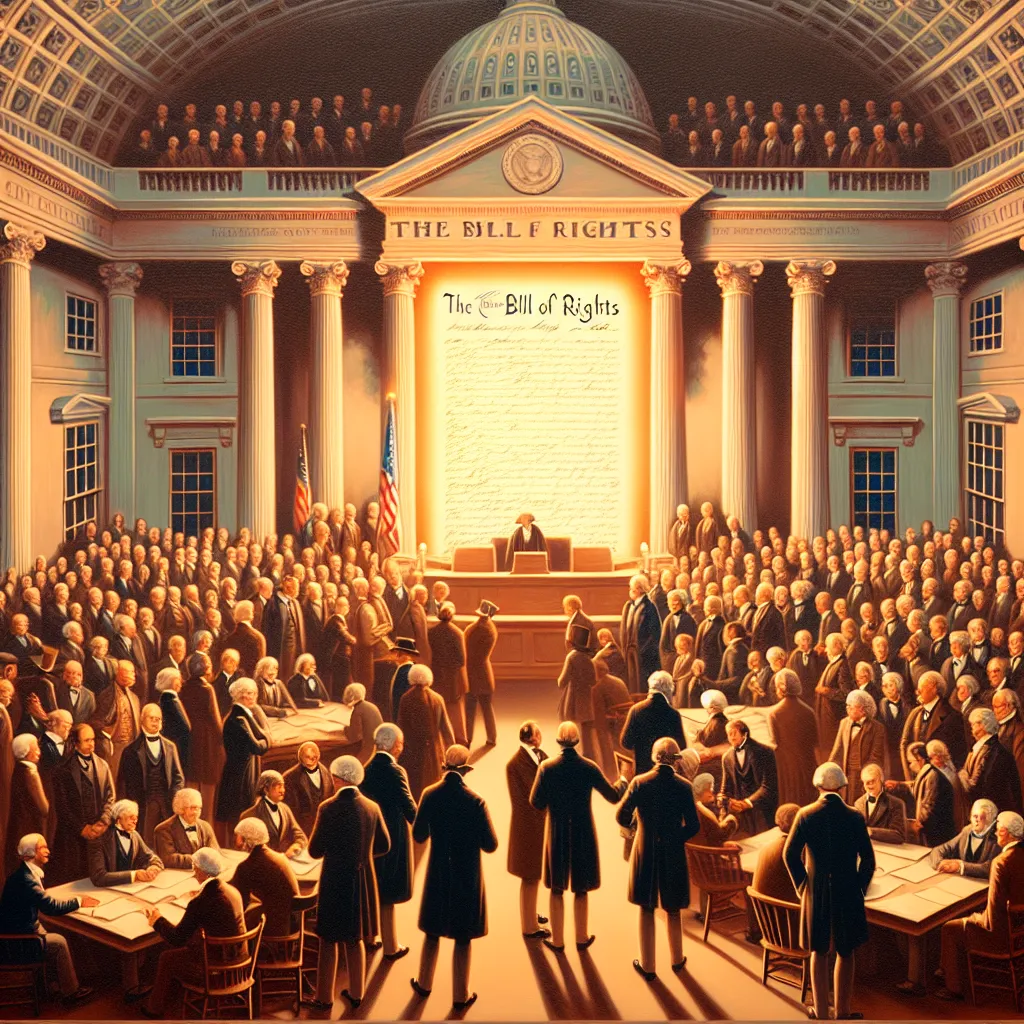
Take a moment to reflect on the US Constitution. What’s the first thing that pops into your mind? Is it freedom of speech? Protection from illegal searches? The right to bear arms? These rights are so ingrained in our understanding of the Constitution that it’s hard to imagine it without them. Yet, the original document didn’t include them. Those individual freedoms, now known as the Bill of Rights, were not added until three years later.
So, did the founders simply overlook them? To answer this, we have to rewind to the Constitution’s very beginnings. Even before the American Revolution kicked off, the Thirteen Colonies formed a provisional government called the Continental Congress. During the war in 1781, the Articles of Confederation were ratified, marking the first national government. But running a new nation was tougher than expected. Congress couldn’t make states comply with laws, raise funds, enforce treaties, or suppress rebellions. It became clear that something had to change.
Enter May 1787. Every state except Rhode Island sent delegates to Philadelphia for a constitutional convention. Most delegates wanted a stronger federal government. Through compromises on key issues like state representation, taxation, and presidential elections, their proposal gained traction. But it wasn’t a done deal yet. The drafted text still needed approval from state conventions. This kicked off months of heated debates across the new nation.
Leading the charge for the new Constitution were statesmen like Alexander Hamilton, James Madison, and John Jay. They argued passionately in a series of essays known as the Federalist Papers. But not everyone was on board. Critics, known as Anti-Federalists, worried that a strong central government would bring back the tyranny they had fought to escape. They were particularly concerned about the lack of protections for individual liberties.
Why were the Federalists hesitant to add a Bill of Rights? Critics accused them of wanting absolute power, but the reality was more practical. Changing the constitution could complicate the ratification process, which some states had already completed. Madison believed people’s rights were already safeguarded by democracy. Plus, listing specific rights could imply that anything not listed was fair game for the government.
As the debate intensified, some states like Massachusetts agreed to ratify the Constitution as long as they could propose their own amendments. Federalists realized compromise was necessary and promised to consider these amendments. Once nine states ratified the Constitution, making it the law, they kept their promise.
In the first United States Congress, James Madison stood on the House floor to propose amendments, despite having previously deemed them unnecessary. After much debate and revision, ten amendments were ratified on December 15, 1791, over three years after the Constitution became law.
Today, every word of the Bill of Rights is seen as fundamental to American freedoms, even though the original framers didn’t include them. Funny how things change, right?