Did Horses Really Shape the Fate of Human Civilization?
The Wild Companions Who Galloped Through Human History
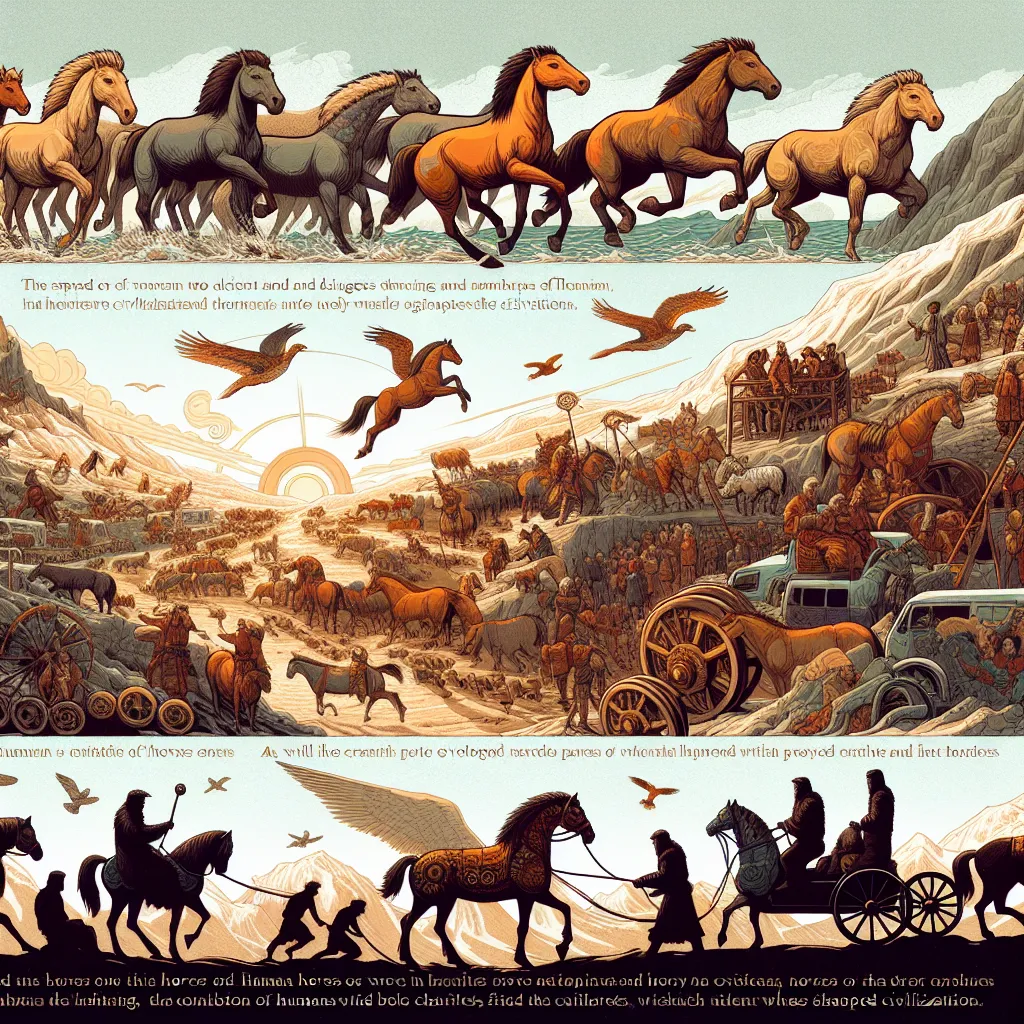
Humans have always been fascinated by horses. They’ve been around in our stories for thousands of years, even appearing in ancient cave paintings. But how did these wild creatures become so intertwined with human history, shaping civilizations and changing the course of events?
Horses first evolved in North America. Over 4 million years ago, these ancient horse species began crossing into Eurasia via the Bering land bridge. They spread across Europe, Asia, and Africa, eventually giving us today’s horses, donkeys, and zebras. Early humans hunted these wild horses and even used their bones for tools. However, between 15,000 and 5,000 years ago, possibly due to climate changes, overhunting, and competition with bison, horses disappeared from America.
Around 2,000 BCE, things took an interesting turn on the Eurasian steppe. People started domesticating horses. Unlike other domestic animals, horses were swift and tricky to manage. So, steppe people created a bridle-and-bit system and crafted chariots with lighter, spoked wheels. Horses became deeply embedded in various ancient cultures.
Initially, horseback riding wasn’t as common as using horse-drawn chariots. Early riders didn’t have structured saddles or stirrups, which sometimes led to physical damage for both the horse and rider. Over time, people bred horses for stamina and better weight-carrying ability. Technologies and tools for better control and comfort followed, and by 1000 BCE, cavalry started appearing in combat scenarios across Asia. Some cultures even included horse sacrifices in their traditions, like the Scythians.
Ancient China soon realized the importance of horses. In around 100 BCE, the Chinese emperor sent a large army west to acquire famous “heavenly horses” from Ferghana. The spread of horse riding technologies, like stirrups, between the 4th and 8th centuries CE allowed nomadic groups to become powerful forces on horseback. The Mongol Empire in the 13th century is a prime example. They developed a horse-backed postal system spanning over 60,000 kilometers and planned their conquests with their horses’ well-being in mind.
Horses continued their spread, influencing equestrian empires south of the Sahara. By the mid-14th century, the Mali Empire boasted a cavalry of over 10,000, controlling vast territories. Horses made a full circle when they were reintroduced to the Americas around 1500, quickly becoming integral to many Indigenous cultures.
Horses spread worldwide and remained crucial for travel and transport well into the 20th century. This integration wasn’t without issues, such as hygiene and animal welfare concerns in growing cities. Eventually, the rise of the automobile changed many human hubs.
Still, our relationship with horses remains strong. From Mongolia’s steppes to Montana’s prairies, people continue to ride, race, herd, and admire these incredible animals.