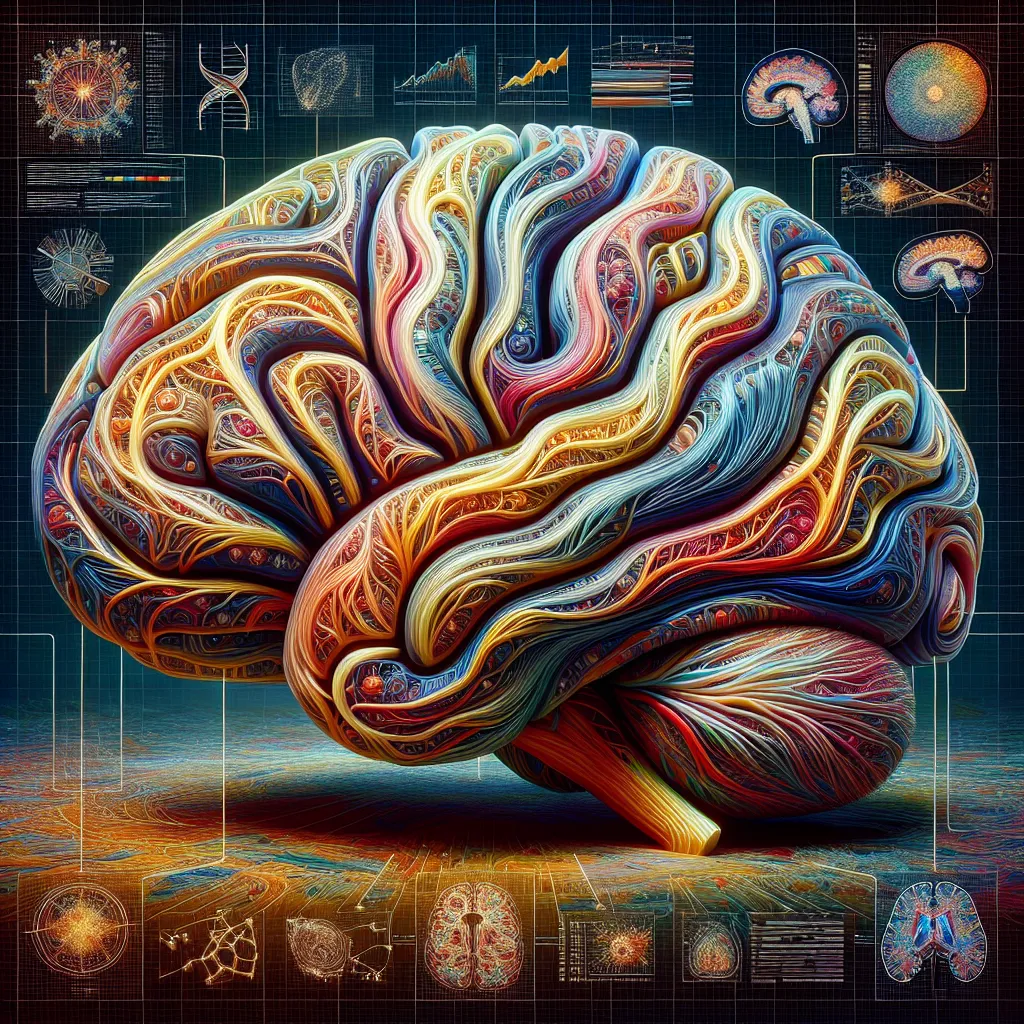
The human brain has always fascinated people, and now, just like the technology-driven transformation of physical maps like Google Maps and GPS, brain mapping is undergoing a similar revolution. When you first look at a fresh human brain, it may not resemble the typical gray, fixed brains often depicted. The human brain is richly vascularized with blood vessels, with about 20% of the body’s oxygen and blood flow dedicated to it.
Scientists in the late 20th century discovered that blood flow tracking could non-invasively map brain activity. Different parts of the brain handle specific functions. The cerebellum, located at the back, helps maintain posture and coordinated movement. The temporal cortex processes auditory information, while the front of the brain, where complex thought and decision-making occur, matures late into adulthood.
Taking a closer look at the brain reveals intricate structures made of cells and interconnecting wires. About a century ago, a staining technique was developed to highlight neuronal cell bodies, showing a non-uniform distribution. The brain consists of around 86 billion neurons, distributed in patterns that contribute to their functions.
Neurons are connected by synapses, with each neuron uniquely partnered with up to 10,000 others. Their biochemistry, driven by proteins encoded by genes, governs cell interactions and nervous system functions. Every individual possesses 23 pairs of chromosomes, totaling about 25,000 genes, dictating cellular functions through gene expression levels.
To study the brain, researchers source brains from medical examiners’ offices, selecting those from individuals aged 20 to 60 who died naturally without brain injuries or psychiatric history. They require consent and collect tissue within 24 hours of death to preserve RNA, the gene expression readout.
One notable finding is that more male brains are collected than female due to higher accidental death rates among men and the likelihood of male spouses giving consent. The collected brain is subjected to MRI scans, providing a framework for further analysis. It’s then sliced, frozen, and shipped for detailed examination.
Slices of the brain are stained, scanned, and analyzed to map anatomic structures, viewed as state boundaries. The brain tissue is laser-cut into micro-sections for RNA purification, and a fluorescent tag is applied for further study. This process generates extensive data sets with detailed gene expression profiles.
The data is freely available to scientists, offering insights into the genetic basis of brain functions and abnormalities. For instance, researchers can explore how drugs like Prozac and Wellbutrin affect gene expression related to their intended effects and side effects. Pattern matching with gene expressions can identify new drug targets.
Genome-wide association studies highlight genes linked to specific traits or conditions but lack spatial information, which this brain mapping project now provides. It helps researchers understand not only what genes are involved but also where they are active in the brain.
Despite the individual differences we celebrate, our genetic and brain similarities are strikingly high. While we are about 99% genetically similar, brain biochemistry shows around 90% similarity, with some subtle variations. Understanding these differences requires larger studies.
In conclusion, brain mapping is an evolving field, shedding light on the complexity of the brain. With ongoing research and data collection, scientists are poised to uncover more about this last great frontier, revealing the mysteries within our skulls.