Can You Imagine Life Through the Eyes of One in a Million?
Comprehending the Unimaginable: A Journey Through the World of One in a Million
Have you ever wondered what it truly means to be “one in a million”? Not in the feel-good greeting card sense, but in the scientific way, where one part per million (ppm) is a precise unit of measurement. Essentially, ppm counts how many units of one substance exist per one million units of another. It’s a way to measure concentrations that make a noticeable impact, even in tiny amounts.
Take carbon monoxide, for instance. Just 35 ppm of it in the air is toxic to us. We encounter these measurements more often than we think, but grasping the concept of one part per million can be tricky because it involves large numbers that are hard to visualize. To make this clearer, here are some relatable examples:
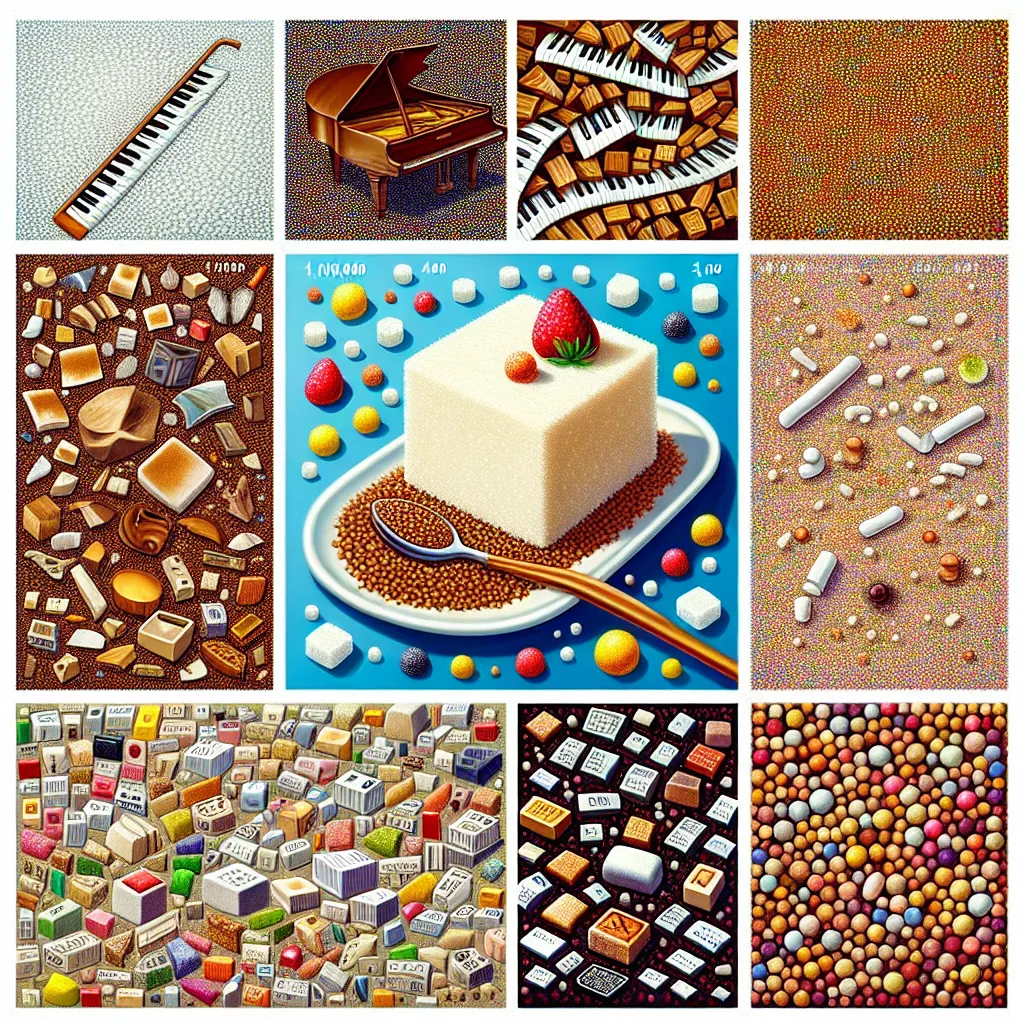
Imagine having 11,363 piano keys spread out before you. One key among them would represent one part per million. Or picture 273 sugar cubes. A single granule of sugar among those cubes also equates to one part per million.
Think of it in the context of time—one second in eleven and a half days symbolizes a similar ratio. If you’re an art enthusiast, visualize four tiny dots in the grand painting “A Sunday Afternoon on the Island of La Grande Jatte” by Georges Seurat.
Envision your bathtub, which holds about 60 gallons. Adding seven drops of ink would be about one part per million. If you love reading, consider the entire Harry Potter series: with its 1,084,170 words, a single word like “hippogriff” from “The Prisoner of Azkaban” stands as a fraction under one part per million.
For those who enjoy a hearty meal, think of a truckload of a million kernels of corn, roughly 1,250 ears. One kernel in that load represents our unit of measure. Now consider the Empire State Building, constructed with 10 million bricks. A pile of just ten bricks is one part per million of the whole building.
Lastly, imagine a team of 100 people who collectively have about 10 million hairs on their heads. Plucking ten hairs from this group gives you a tangible example of one in a million.
These illustrations help demystify the concept of one part per million, making it easier to comprehend its significance and impact.