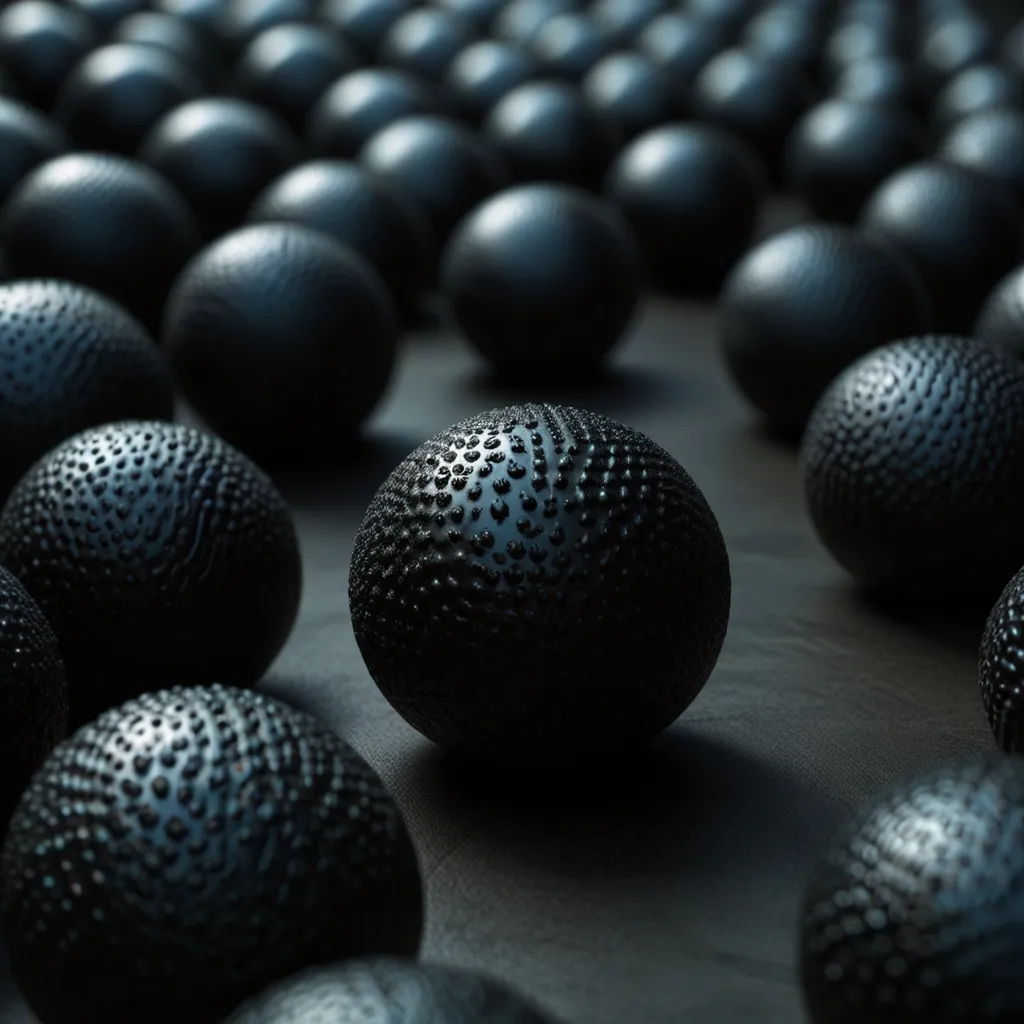
At the subatomic and atomic levels, objects behave like waves, acting as Quantum objects. Large objects, however, like a squash ball, consist of an astronomical number of atoms—almost 10^15. Each of these atoms acts as a wave-like quantum object.
The challenge is that in large objects, the waves from these countless atoms interfere with each other in a disorganized and random manner. This interference averages out to zero on a macroscopic scale, a phenomenon known as decoherence. Because of decoherence, it’s hard to get a large object to act like a quantum object.
For a macro object like a squash ball to behave like a quantum object, all its quadrillions of individual waves would need to be coherent, meaning they would have to act in an organized way. The more coherent an object, the more it behaves like a wave and a quantum object. Achieving coherence in large objects is next to impossible, making it unfeasible for things like squash balls.
Interestingly, scientists have managed to achieve coherence in some large molecules consisting of several thousand atoms. This shows that while difficult, it’s not entirely impossible under the right conditions.