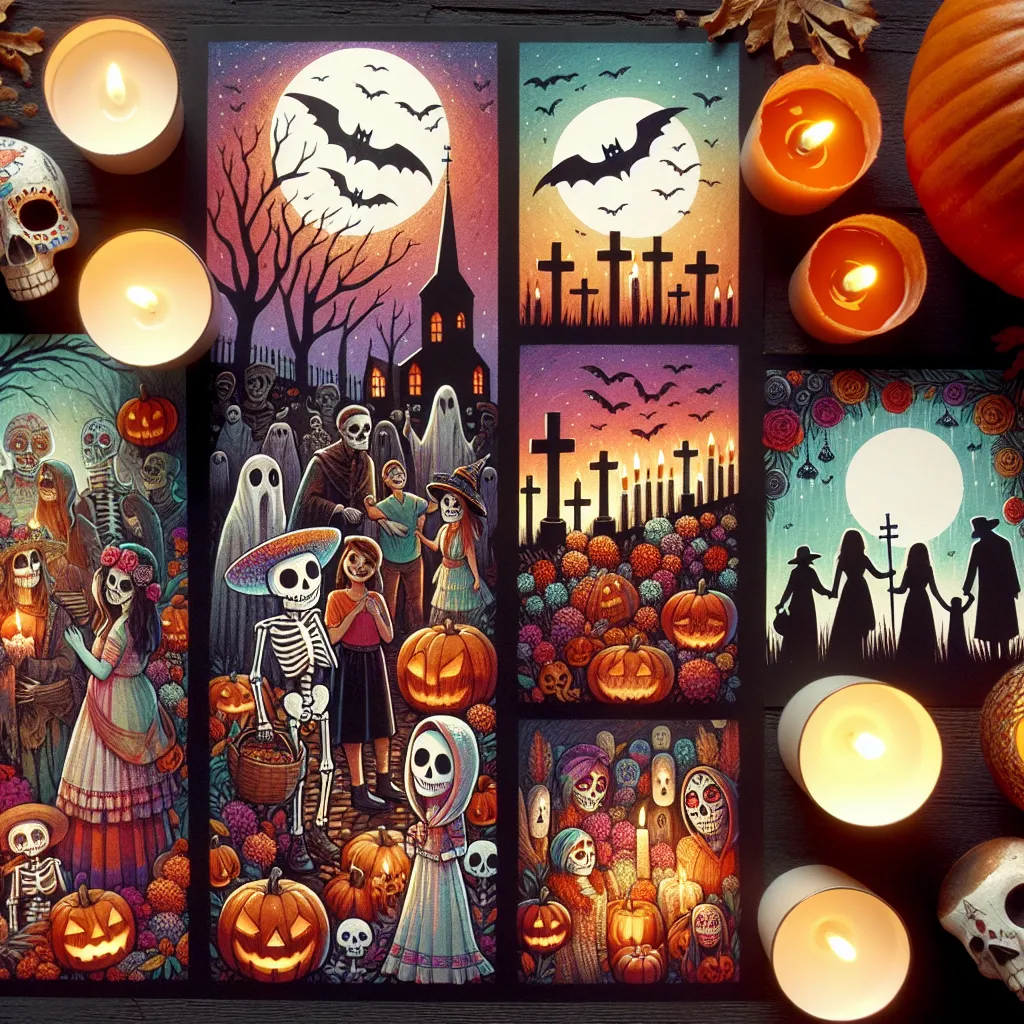
It’s that time of year when many people start thinking about death more than usual. Between late October and early November, a trio of holidays reminds us of the afterlife. Most of us know Halloween pretty well; it’s the day of ghosts, ghouls, and trick-or-treating. But there’s also All Saints’ Day and All Souls’ Day, which often get lumped together and can be a bit confusing.
Let’s break it down. All Saints’ Day and All Souls’ Day are Christian holidays that fall in early November. They have a deep history and are closely tied to Halloween, which itself has roots in the ancient Celtic festival of Samhain. Samhain, celebrated starting October 31st, marked the end of summer and the beginning of winter. It was believed that during this time, the veil between the living and the dead was at its thinnest, making communication easier.
Christianity, as it spread, often incorporated existing local customs into its own practices. This made the transition to Christianity smoother for new converts. Similar to how Christmas coincides with earlier pagan festivals, All Saints’ Day was set on November 1st, overlapping with Samhain’s themes of honoring the dead.
Halloween, or All Hallows’ Eve, comes from “All Hallows Day” (another name for All Saints’ Day). The day after November 1st, we celebrate All Souls’ Day, which is dedicated to remembering all the faithful departed. Together, these three days form a grouping sometimes referred to as Hallowtide.
Despite their intertwined origins, Halloween and All Saints’/All Souls’ Day are pretty distinct today. Halloween has morphed into a popular, often consumer-driven holiday, whereas All Saints’ and All Souls’ Day remain more solemn religious occasions.
Across Europe, these holidays are celebrated in varied ways. For example, in Mexico, All Souls’ Day is known as the Day of the Dead and is a colorful celebration of life and death. In Sweden, both Halloween and All Saints’ Day are observed, but they are clearly separated. Halloween is on October 31st, but since the 1950s, All Saints’ Day is celebrated on the first Saturday in November, blending it with All Souls’ Day aspects.
Sweden is quite secular, often ranking as one of the most secular countries globally. However, this doesn’t mean Swedes don’t value traditions. All Saints’ Day in Sweden resembles All Souls’ Day more than its original intent of honoring saints and martyrs. On this day, Swedes gather, visit graves, and light candles in memory of loved ones.
In Stockholm, a large cemetery called Skogskyrkogården becomes a sea of candlelight on All Saints’ Day. Despite the holiday’s Christian roots, many Swedes celebrate it as a more universal, secular remembrance day.
It’s fascinating to see how different cultures adapt and reframe these traditions, highlighting the interplay between religion and secularism. As we remember those who have passed, whether through the colorful festivities of Day of the Dead or the quiet candlelit vigils in Sweden, these days offer a chance to reflect on life and loss in meaningful ways.