Traveling to Amsterdam and the Netherlands was an unforgettable experience. I finally met some amazing friends and colleagues, and even had a casual meet-and-greet with fans. A highlight of the trip was our Spinoza pilgrimage. We walked in the footsteps of Baruch Spinoza, one of the most intriguing philosophers of the Modern Age.
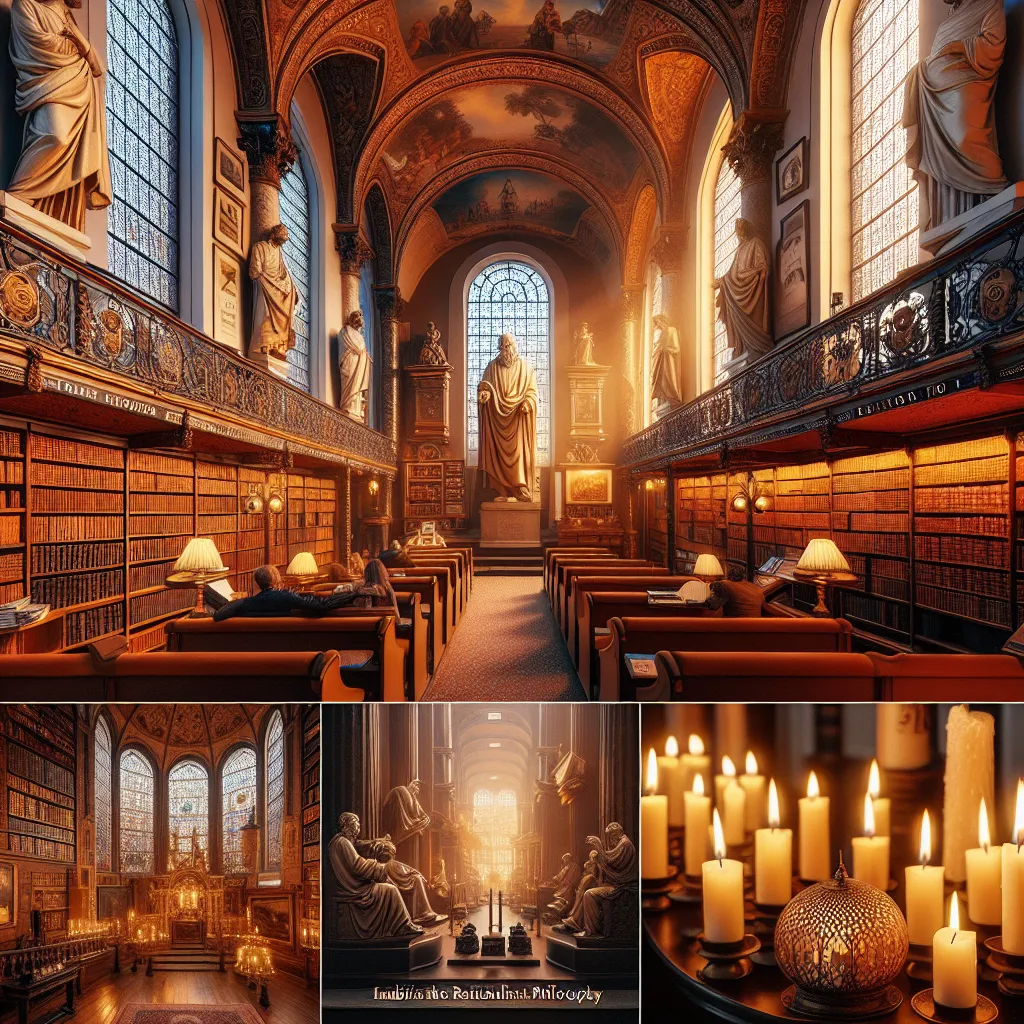
Spinoza, born to a Sephardic Jewish family in the Netherlands, spent his whole life in the country. His family had fled from Spain or Portugal, settling in the Jewish community of Amsterdam, which had a significant Jewish population and a grand synagogue that still stands today. This synagogue, known as the Portuguese Synagogue, hasn’t changed much since Spinoza’s time. It’s beautifully lit by candles, offering a glimpse into the past.
Spinoza faced excommunication by the Jewish leaders due to his radical ideas. The exact reasons remain a mystery, but his thoughts made the leaders uncomfortable. This event profoundly affected him and his family. He left Amsterdam and spent the rest of his life in other parts of Holland, continuing to develop his unique philosophy.
I visited the house where Spinoza lived in Rijnsburg, near Leiden, and later moved to The Hague. These places are open to visitors and give you an authentic sense of his life and work. His library in Rijnsburg has been reconstructed with his original collection of books. Spending time there with friends, exploring his books, felt like getting to know Spinoza personally.
Spinoza’s key works include the “Theological-Political Treatise” and “Ethics.” His ideas, particularly about God and metaphysics, were groundbreaking. He believed that reality consists of a single substance, which is both God and nature. This pantheistic view—that everything is part of God—was revolutionary. His rationalist approach rejected miracles and a personal God, viewing scripture as conveying ethical messages through stories and metaphors, rather than literal truths.
Spinoza emphasized the importance of freedom in thought and expression, and he championed democracy as the best political system. His views have significantly influenced modern liberalism and contemporary thought. He separated faith from reason, seeing religion as concerned with ethics and philosophy with truth.
Standing in Spinoza’s library, I felt the weight of his intellectual legacy. Amsterdam, while still acknowledging his excommunication, now proudly commemorates him. He remains a foundational figure in modern rationality and the Enlightenment.
In Amsterdam, a statue of Spinoza stands near the old Jewish district, close to where he once lived. The statue faces the governor’s office, bearing the inscription, “The purpose of the state is freedom,” capturing the essence of Spinoza’s philosophy.
Exploring these historical sites and understanding Spinoza’s life and work was a powerful experience. His ideas continue to inspire and challenge us today.