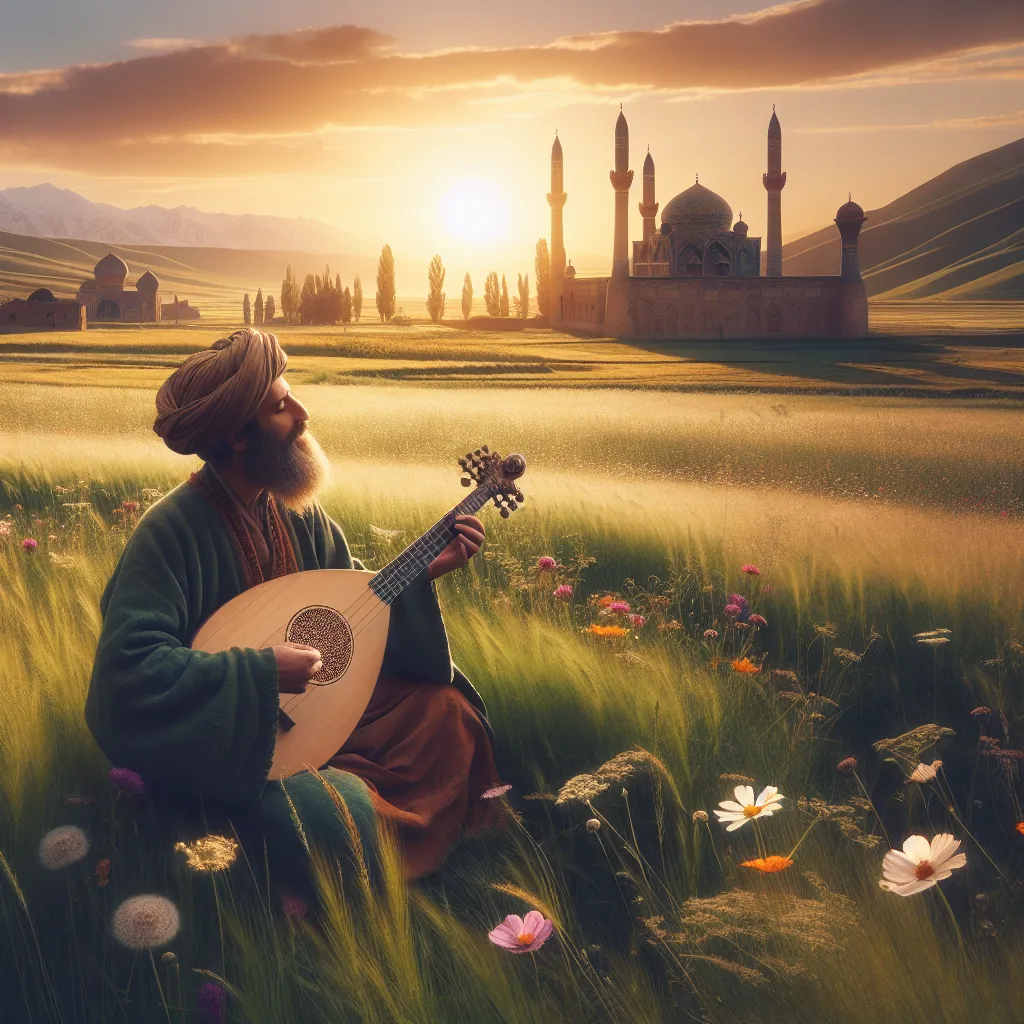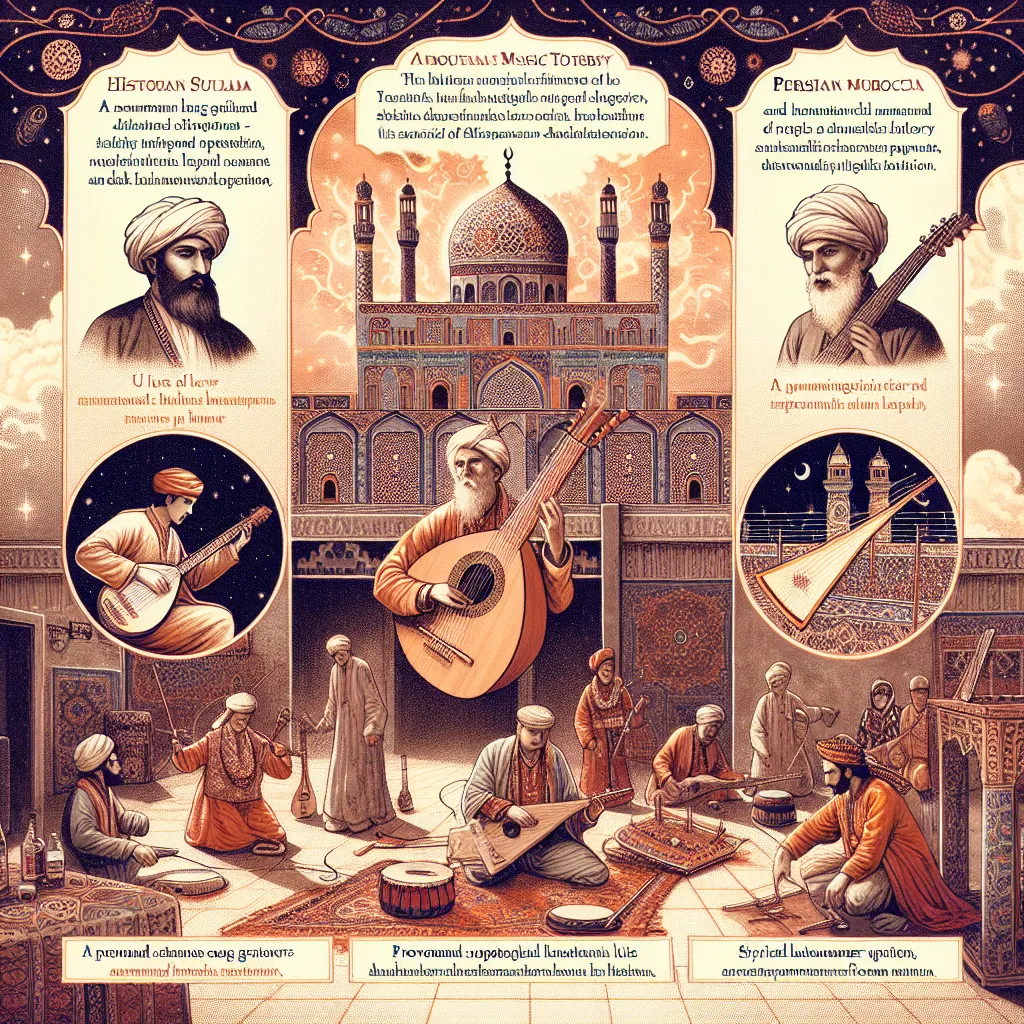
Music in the Islamic world is a vast topic that could easily fill volumes. Covering it comprehensively in videos would be an enormous task, but I’ll do my best to provide a snapshot of its journey through history, especially post-medieval. This era is brimming with fascinating developments and is nothing short of inspiring.
In Part One, I explored the beginnings of music in the Islamic context, from the early Arabic musicians like Ibn Misja to the Andalusian Ziryab during the Abbasid era. I also delved into the theoretical mind of Safiya Din Urmawi from Baghdad, whose “Kitab al-Adwar” was groundbreaking for music theory. Urmawi’s work paved the way for future explorations of musical notation, despite being one of the earliest attempts at systematically notating music.
Moving forward, notable scholars such as the Iranian polymath Qutb al-Din al-Shirazi expanded on Urmawi’s groundwork. Shirazi created more comprehensive music notation systems, although his innovations did not have a lasting influence. In contrast, later figures like Abdulqader al-Maraghi left a significant legacy. Al-Maraghi’s works, including “Jamia al-Haan,” were critical in evolving music notation and composition, echoing through the courts of the Ottomans, Safavids, and Mughals.
Ottoman music, especially, saw an enrichment from Sufi traditions. The Mevlevi Order, founded around the teachings of Rumi, integrated music and dance into their spiritual practices. Their whirling dervish ceremonies, known as Sema, involved highly sophisticated musical compositions called Ayin. These pieces, deeply spiritual and structured around extended ritual suites, brought Islamic music to the forefront of spiritual and courtly life.
Similarly, in the Indian subcontinent, the Sufis, particularly through the Chishti Order, influenced musical traditions. Amir Khusro, a student of Nizamuddin Auliya, is often credited with pioneering Qawwali music, though much of his attributed innovations might be more legendary than factual. Qawwali remains a vital genre, celebrated globally through the efforts of artists like Nusrat Fateh Ali Khan.
Western North Africa, or the Maghreb, developed its unique soundscape fused with Arabic, Persian, and local Berber traditions. The Gnawa music of Morocco exemplifies this blend, incorporating instruments like the gimbri and krakebs. Even though the region was under Ottoman rule, it maintained distinct musical identities.
As political and cultural boundaries evolved, so did musical distinctions. The Safavid and later Qajar dynasties in Iran fostered what we know today as Persian classical music. Instruments like the tar, setar, and kamāncheh became staples, diverging from the Arabic and Turkish traditions. Similarly, the Indian subcontinent’s Mughal period saw a flourishing of music, integrating native styles with Islamic influences.
In conclusion, music in the Islamic world has always been a dynamic tapestry of cultural exchange and innovation. From medieval theorists to Sufi mystics and modern-day maestros, it reflects a history of deep interconnectedness across vast regions. The story of this music is far from over, continually evolving and inspiring people worldwide.