religion

Did Early Islamic Scholars Really Permit Certain Alcohols?

Alcohol's Transformation in Early Hanafi Jurisprudence: From Grape Wine Specificity to Broad Prohibition

Did Early Islamic Scholars Really Permit Certain Alcohols?

You might think that alcohol was always forbidden in Islam, but the story is more nuanced, especially when you consider the Hanafi school of thought. If you dig into history, you’ll find the largest school of Islamic law had quite a different take on alcohol, particularly in its early years.

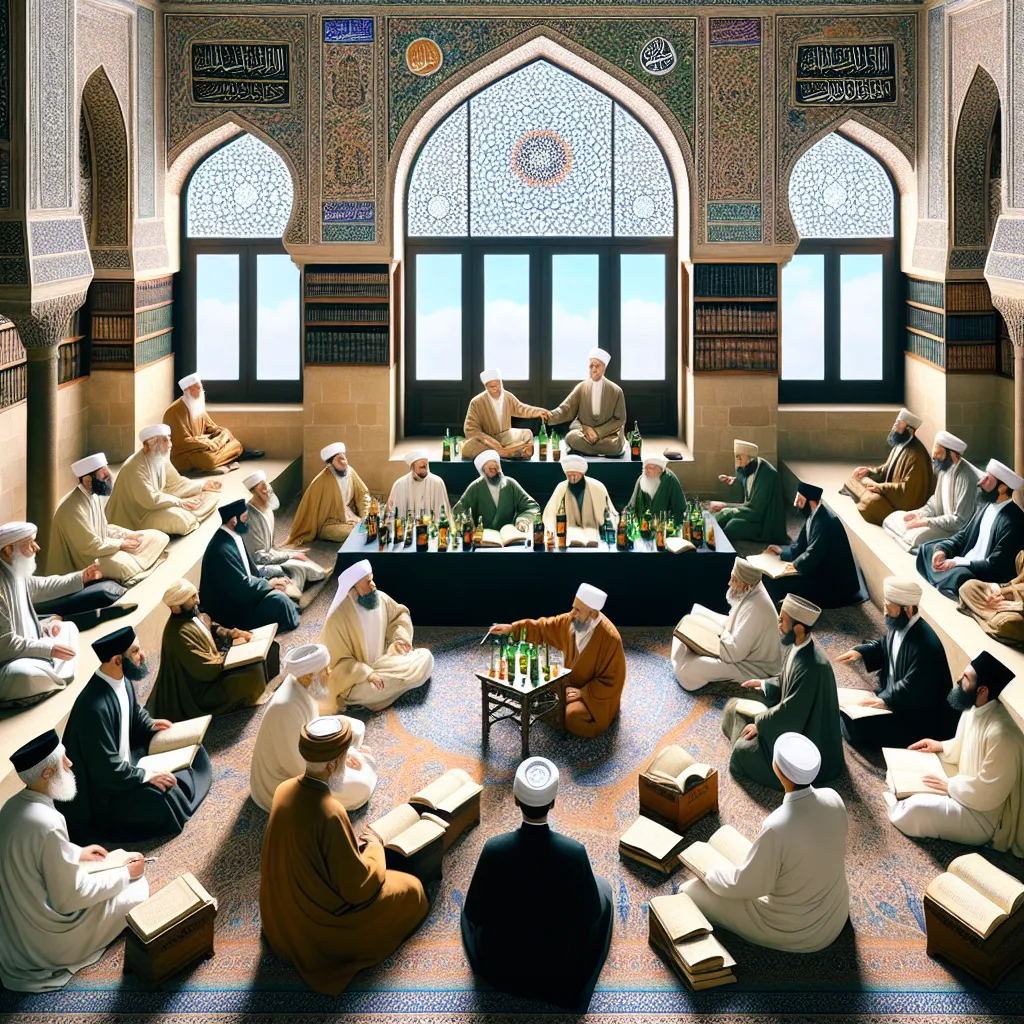
The Hanafi school was founded by Abu Hanifah, a renowned Islamic scholar. For the first few centuries, scholars from his school argued that not all forms of alcohol were forbidden. Their reasoning was based on the Quran’s specific mention of wine, which they interpreted as grape wine. In other words, they believed the prohibition was limited to grape wine only.

Other types of alcoholic drinks were considered permissible under the Hanafi doctrine, as long as they didn’t lead to intoxication. This was the standard position of the Hanafi school for a long time.

However, things didn’t stay this way forever. Over time, the consensus began to shift. By around the 12th century, the Hanafi school started to align more with the other Islamic schools, adopting a more general prohibition on all forms of alcohol. This change didn’t happen overnight but evolved gradually as scholars continuously revisited and reinterpreted Islamic teachings.

It’s fascinating to see how interpretations can evolve over time and how a once widely accepted view can shift dramatically following deeper scholarly discourse.


Similar Posts
Blog Image
What Can We Learn About Life from Zu's Imaginary Transformations?

Embracing Transformation: Friends Find Wisdom in Life, Aging, and Death's Dance

Blog Image
Baháʼí Fast: 19 Days of Spiritual Growth That Will Change Your Life

The Baháʼí Nineteen-Day Fast is a spiritual practice of abstaining from food and drink from sunrise to sunset for 19 days in March. It's a time for reflection, prayer, and spiritual growth. This fast emphasizes self-discipline, community unity, and inner renewal. It concludes with Naw-Rúz, the Baháʼí New Year celebration, marking spiritual rebirth.

Blog Image
Is a Floating Man in Space Aware of Himself? Dive Into Avicenna's Mind-Bending Thought Experiment

Floating in Thought: Avicenna’s Timeless Dive into Soul and Existence

Blog Image
Ancient Rituals in Modern Life: 5 Timeless Practices Shaping Our World Today

Discover how ancient religious rituals shape modern society. Explore baptism, Namaste, smudging, Zakat, and meditation's impact on community, wellness, and social responsibility. Learn more!

Blog Image
Can Buddhism Show Us the Way Out of Suffering?

Discovering Enlightenment: How Buddhism Transcends Suffering and Guides Us to Inner Peace

Blog Image
What Could Happen If You Centered Your Life Around God?

The Oceanic Journey of a God-Centered Life