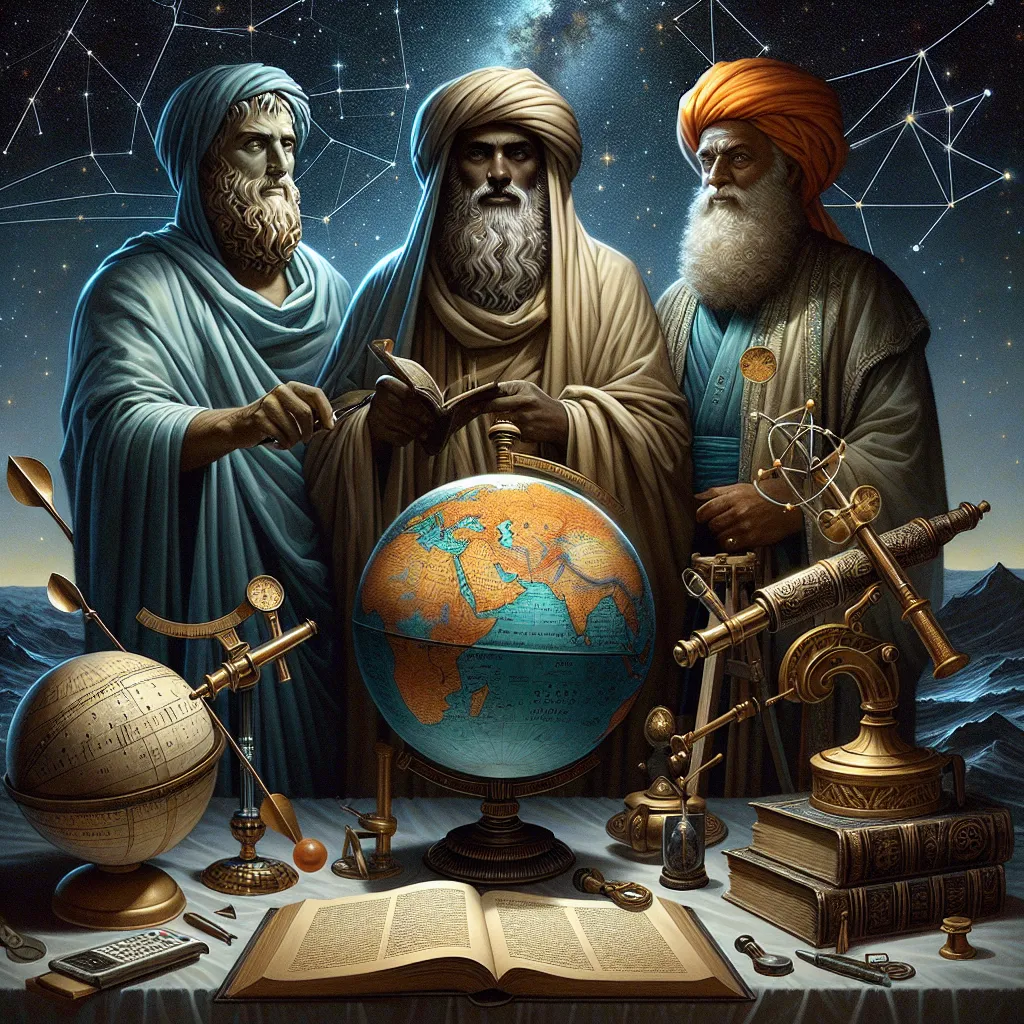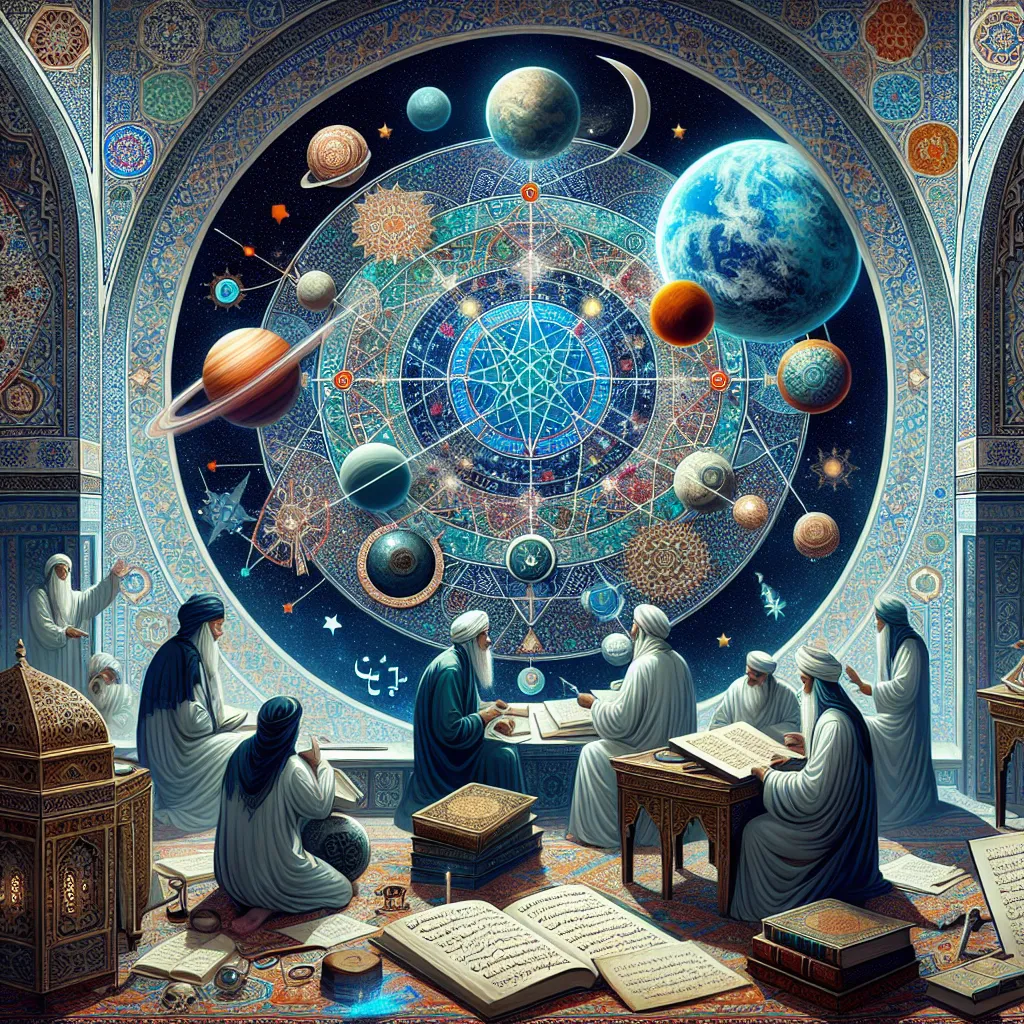
Let’s embark on a journey into the world of occult sciences, specifically focusing on astrology, one of the most celebrated branches of this mystical field throughout history. Recently, we’ve started to explore the mysteries of talismans and magical objects. Today, we’re diving into how the movements and behaviors of heavenly bodies are believed to influence and reflect our earthly lives.
Astrology holds a fascinating yet controversial spot within Islamic occult sciences. It faced significant opposition from notable Islamic scholars such as the 14th-century theologian Ibn Taymiyah and historian Ibn Khaldun. They argue that attributing life’s happenings to planetary movements detracts from God’s sovereignty, equating the practice to polytheism. Despite these criticisms, astrology thrived across all social classes in the Islamic world, from common folks to kings and scholars.
Key to understanding astrology is distinguishing it from astronomy. While astronomy examines heavenly bodies and their movements for practical applications like defining prayer times, astrology suggests that these celestial movements directly impact life on Earth. Pioneers like Abu Mashar described it as the study of the influence of planets and stars on earthly events, shaping the seasons, nature, and even human destinies.
Astrology’s roots in Islamic culture intersect significantly with prior traditions like those of the Babylonians, Egyptians, and Greeks. In pre-Islamic Arabia, astrology played a role in divination and religious practices. Furthermore, it was through the Abbasid period’s scholarly pursuits that astrology truly blossomed, with translations and importations of astrological works from Persia, India, and Greece.
The geocentric model of the universe, proposed by Ptolemy and augmented by Aristotle’s natural philosophy, formed the cosmological backdrop for Islamic astrological thought. This model placed Earth at the universe’s center, surrounded by concentric celestial spheres each associated with a planet. Astrology thus became intimately linked to natural science, examining how celestial forces influenced the four elemental natures of fire, air, water, and earth.
Two Islamic scholars, Al-Kindi and Abu Mashar, substantially advanced the field. Al-Kindi, known for his theory of stellar rays, posited that heavenly bodies emit rays that interact and influence the Earth’s beings and phenomena. This idea not only bridged astrology with Islamic faith but also paved the way for magic practices involving planetary correspondences.
Abu Mashar, another central figure, combined astrological principles with medical theory, suggesting that planetary heat and heavenly movements had direct, naturalistic impacts on earthly elements and human conditions. His works were instrumental in establishing astrology as a companion to other sciences.
Practically, astrology was widely used for divination and magic. The famous grimoire, “Picatrix” or “Ghāyat al-Ḥakīm,” synthesized Islamic astrological knowledge, advising on creating talismans and performing rituals in alignment with celestial events. This work had a significant influence on both Islamic and Western esoteric traditions, blending astrological practices with magical operations.
Astrology and its intertwined practices haven’t just been relics of the past. These ideas live on, influencing modern perspectives on mystical and esoteric traditions. The work of early Islamic philosophers shed light on celestial influences and their earthly implications, inspiring centuries of astrological and esoteric study in both Eastern and Western worlds.
This exploration is just a gateway to the broader universe of Islamic occult sciences. There’s much more to uncover about specific grimoires, the practical applications of astrologically-infused magic, and detailed elements like alchemy and the science of letters. It’s a journey of profound intellectual and mystical insights, bridging ancient wisdom with modern understandings. Stay tuned for more thrilling forays into this captivating subject!