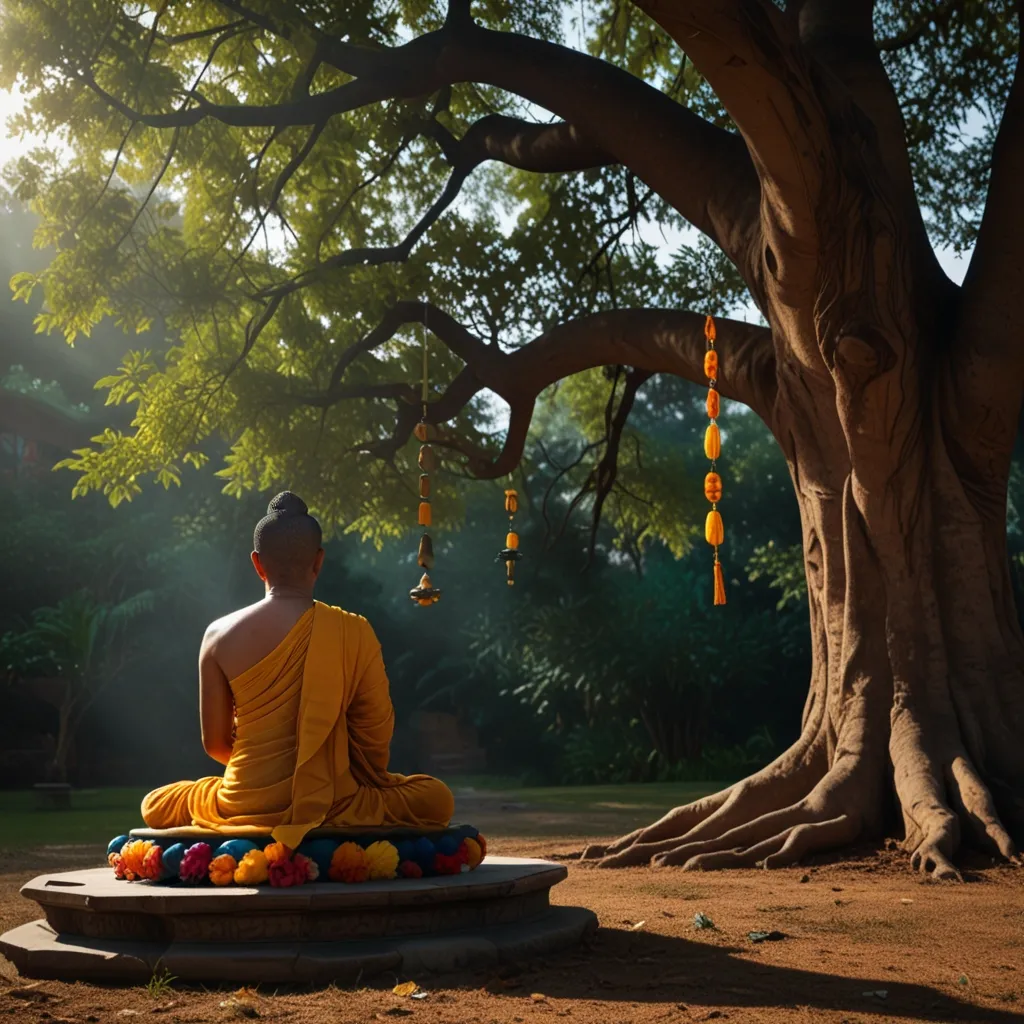
Buddhism has been around for over 2,500 years, with its roots going back to India. It’s centered on the teachings of Siddhartha Gautama, who is known as the Buddha, or the “Awakened One.” The big idea in Buddhism is that life is a cycle of suffering and rebirth, but reaching enlightenment—or nirvana—can break that cycle.
The core of Buddhism lies in the Four Noble Truths. The first truth is that life involves suffering. This doesn’t mean life is all doom and gloom, but rather it comes with its share of challenges and imperfections. The second truth is that suffering springs from desire and ignorance. When we desire things we can’t have or don’t understand the world around us, we suffer. The third truth promises that suffering can end. By letting go of desires and gaining a better understanding, peace can be found. Finally, the fourth truth introduces the path to end suffering, known as the Eightfold Path.
The Eightfold Path is like a roadmap for leading a good life. It talks about right understanding, right intention, right speech, right action, right livelihood, right effort, right mindfulness, and right concentration. Following these principles helps Buddhists live ethically and wisely.
Another interesting aspect of Buddhism is karma. This is the belief that actions have consequences. Good actions lead to good outcomes, while bad actions lead to bad outcomes. This pushes Buddhists to act kindly and responsibly.
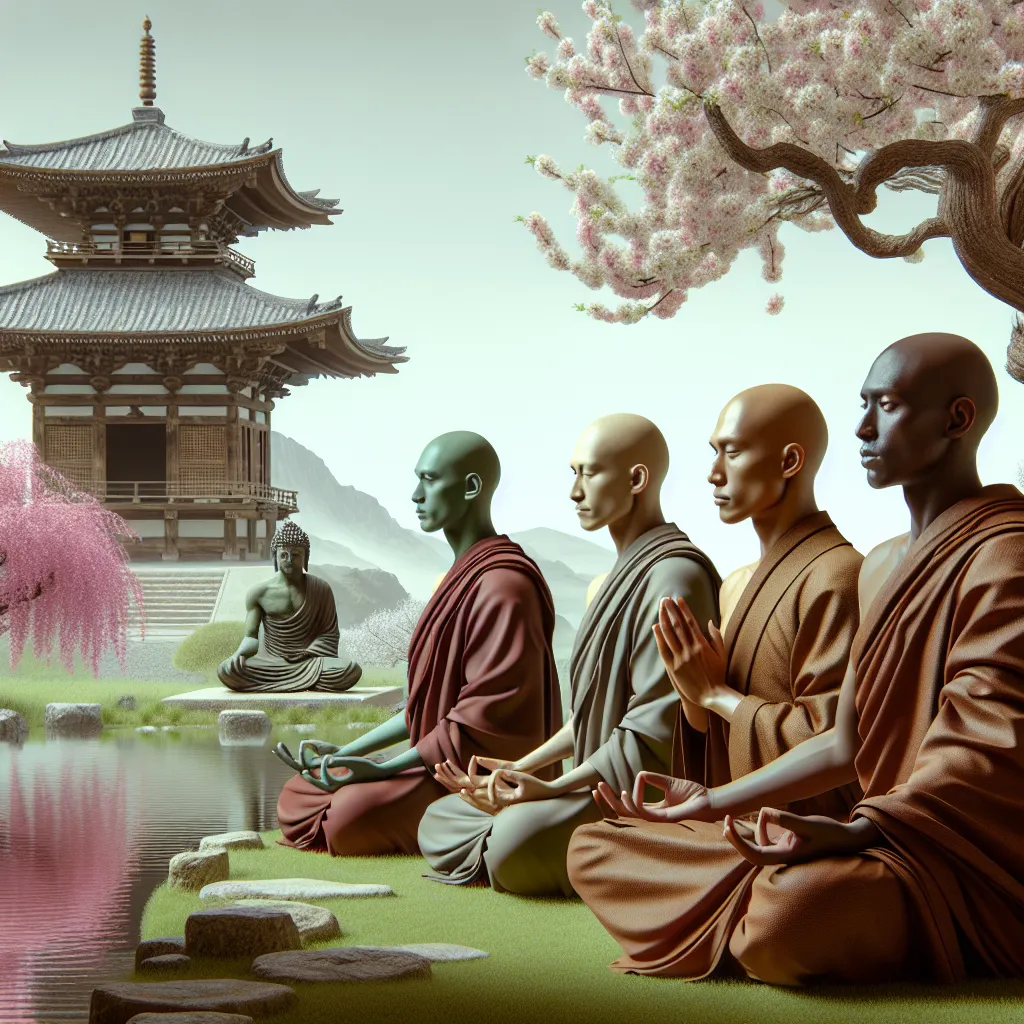
There are three main branches of Buddhism: Mahayana, Theravada, and Vajrayana. Mahayana Buddhism is popular in countries like China, Taiwan, Japan, and South Korea. It highlights bodhisattvas—beings who have reached enlightenment but choose to help others achieve it as well. Theravada Buddhism is practiced mainly in Sri Lanka, Cambodia, Thailand, Laos, and Myanmar. It focuses on a monastic lifestyle and meditation to achieve enlightenment. Vajrayana Buddhism, found in Tibet, Nepal, Bhutan, and Mongolia, offers a faster path to enlightenment through rituals and meditation.
Buddhists believe in reincarnation—the idea that the soul is reborn into a new body after death. How good or bad the new life is depends on the person’s karma from past lives. This concept ties into the wheel of rebirth, where souls are reborn based on their previous actions.
Faith is also a key part of Buddhism, but not in the traditional sense. It’s not about blindly believing; rather, it’s about trust and confidence in the teachings. It means placing your heart on the path and trusting it will lead to enlightenment. Faith can also involve relaxation and acceptance, embracing the present moment without resistance.
Buddhism has made its way across the globe, influencing many cultures. In the West, it’s often practiced as meditation and mindfulness, helping people find peace and clarity. Despite its widespread influence, Buddhism remains deeply connected to its original teachings, providing a rich path to spiritual growth.
In essence, Buddhism is both a religion and a philosophy that offers a guide to living a meaningful, ethical life. Its teachings on suffering, karma, and the path to enlightenment help people understand the world and find peace. Whether in its traditional form or adapted for modern life, Buddhism continues to inspire millions worldwide.