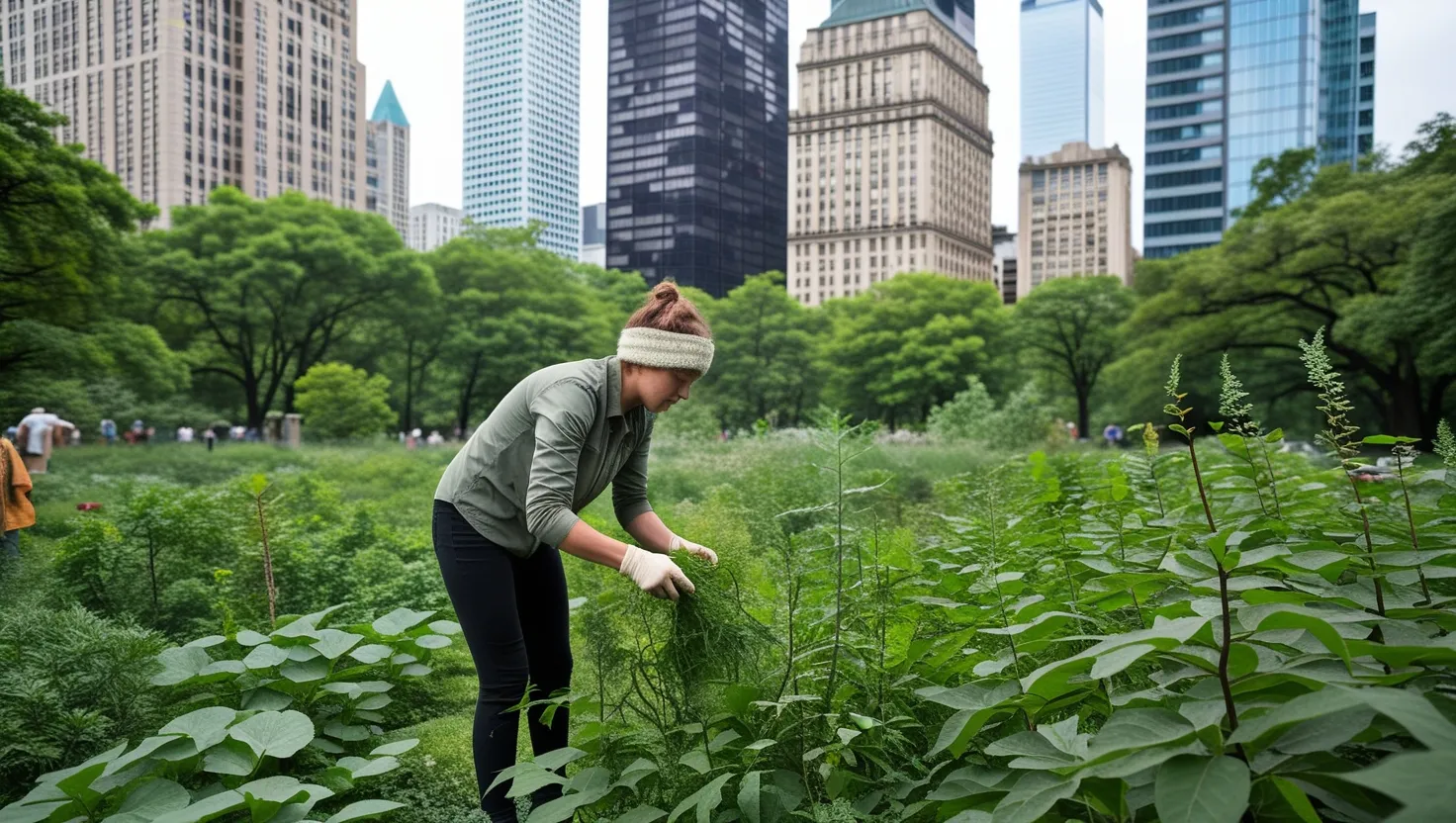
In the heart of bustling cities, a quiet revolution is underway. Urban foraging, the practice of hunting for edible plants, fruits, and fungi in the unlikeliest of places, is gaining momentum. This trend is not just about finding free food; it’s a journey that reconnects city dwellers with nature, challenges traditional notions of food security, and sparks important conversations about urban ecology and community resilience.
Imagine strolling through New York City’s Central Park, not just to enjoy the scenery, but to identify and harvest edible plants. Guided tours led by experts like Steve Brill have made this possible, teaching participants how to distinguish between safe and unsafe plants. These tours are more than just a culinary adventure; they are educational sessions that foster a deeper connection between people and the natural world. The expansion of urban foraging in New York City beyond Central Park has opened up a world of possibilities, with various green spaces now offering a diverse array of wild foods, from fruits to greens[1].
In Seattle, the focus shifts to mushrooms, with Discovery Park emerging as a prime destination for fungal foraging. Here, enthusiasts can find chanterelles and morels, guided by local organizations that ensure safe identification and harvesting. The park’s diverse habitats make it an ideal spot for urban mushroom foraging, highlighting the rich biodiversity that exists even in urban environments[1].
But urban foraging is not without its challenges. One of the most critical concerns is safety. Foragers must be cautious about the locations they choose, avoiding areas contaminated by traffic and other pollutants. Common wisdom advises harvesting plants at least 30 to 100 feet away from busy roads to minimize the risk of contamination. This rule is crucial in cities, where the proximity to vehicular thoroughfares can significantly impact the safety of the plants[2].
Legal issues also come into play. In many cities, harvesting plants from public parks is technically illegal, despite the practice being widespread. However, some parks and community gardens are now embracing urban foraging, providing designated spaces where it is not only legal but also encouraged. The Beacon Food Forest in Seattle’s Jefferson Park is a prime example, where foraging is accessible and supported[2].
The practice of urban foraging is rooted in traditional knowledge but is increasingly influenced by modern sustainability concerns. It raises important questions about food security and urban ecology. For instance, urban foraging can contribute significantly to nutrition and food security, especially in communities where access to fresh produce is limited. Wild greens and other foraged foods can provide essential nutrients, making them a valuable addition to urban diets[2].
Moreover, urban foraging has the potential to reshape cityscapes. By utilizing abandoned lots and other underused spaces, foragers are transforming urban landscapes into productive and sustainable areas. This not only enhances the aesthetic appeal of cities but also promotes community engagement and resilience. Community gardens like the Danny Woo Community Garden in Seattle’s Chinatown-International District serve as essential hubs for community building, education, and access to healthy food[2].
The community aspect of urban foraging is perhaps its most compelling feature. It encourages interaction between neighbors and fosters a sense of community cohesion. For example, if a plant you want to pick is on private property, knocking on the owner’s door and asking for permission can lead to new connections and a consistent source of forageable food. This approach not only respects property rights but also builds relationships and a sense of mutual benefit[2].
Technology is also playing a significant role in the urban foraging movement. Apps like the Wild Edibles Forage App empower city dwellers to explore the edible possibilities in their neighborhoods. These tools provide detailed information on plant identification, safe harvesting practices, and even maps of foraging locations, making it easier for beginners to join the foraging community[1].
In cities like London, urban foraging is becoming increasingly popular, with foragers combing parks and other green spaces for edible plants and fungi. This trend is part of a broader movement to reconnect with nature, even in the midst of urbanization. It reflects a growing awareness of the importance of sustainable living and the need to find innovative ways to integrate natural resources into urban lifestyles[4].
Urban foraging also has a profound impact on our relationship with nature. It challenges the conventional view of cities as mere concrete jungles devoid of natural life. Instead, it reveals the hidden biodiversity that exists within urban environments, encouraging a more holistic understanding of urban ecology. By engaging with nature in this way, city dwellers are reminded of their place within the larger ecosystem and the importance of preserving and respecting natural resources[5].
In conclusion, urban foraging is more than just a hobby or a way to find free food; it is a movement that is reshaping how we think about food security, urban ecology, and community resilience. As cities continue to grow and urbanization intensifies, the practice of urban foraging offers a unique opportunity to reconnect with nature, foster community engagement, and promote sustainable living. Whether you are a seasoned forager or just starting out, this journey into the wild heart of the city promises to be both rewarding and transformative.