5 Ancient Daoist Habits That Outperform Every Modern Productivity Hack
Discover 5 ancient Daoist habits that reduce stress and sharpen focus. Simple, practical, and surprisingly effective for modern daily life. Start today.
There’s a good chance your morning looks something like this: alarm goes off, phone gets grabbed, emails get scanned, coffee gets inhaled, and before you’ve even put on shoes, your brain is already running at full speed. Sound familiar?
Now imagine waking up 2,000 years ago in ancient China, sitting quietly in a garden, watching dew disappear from a leaf, and genuinely believing that was the most productive thing you could do with the first hour of your day. Sounds ridiculous by modern standards, right? Except those people figured out something we keep missing — that stillness and simplicity aren’t laziness. They’re a strategy.
Daoism, the ancient Chinese philosophy built around the idea of aligning with the natural flow of life, has been quietly offering us a manual for better living for over two millennia. The core idea is almost offensively simple: stop fighting everything so hard. Move with life rather than against it. Do less, but do it better. The Chinese called it wu wei — effortless action. And before you roll your eyes, consider that some of history’s most effective thinkers, leaders, and artists lived by versions of this idea.
“Nature does not hurry, yet everything is accomplished.” — Lao Tzu
Let’s look at five actual Daoist practices that translate surprisingly well into modern life, and why each one works better than most productivity hacks you’ve ever tried.
Your morning sets the entire tone of your day — but not in the way apps want you to think.
Most advice about mornings tells you to optimize them. Journal, exercise, cold shower, affirmations, read twenty pages. That’s just a different kind of rush wearing a wellness costume. Daoist practitioners did the opposite. They started the day with quiet observation — a garden, a tree, the changing light. No agenda. No output. Just presence.
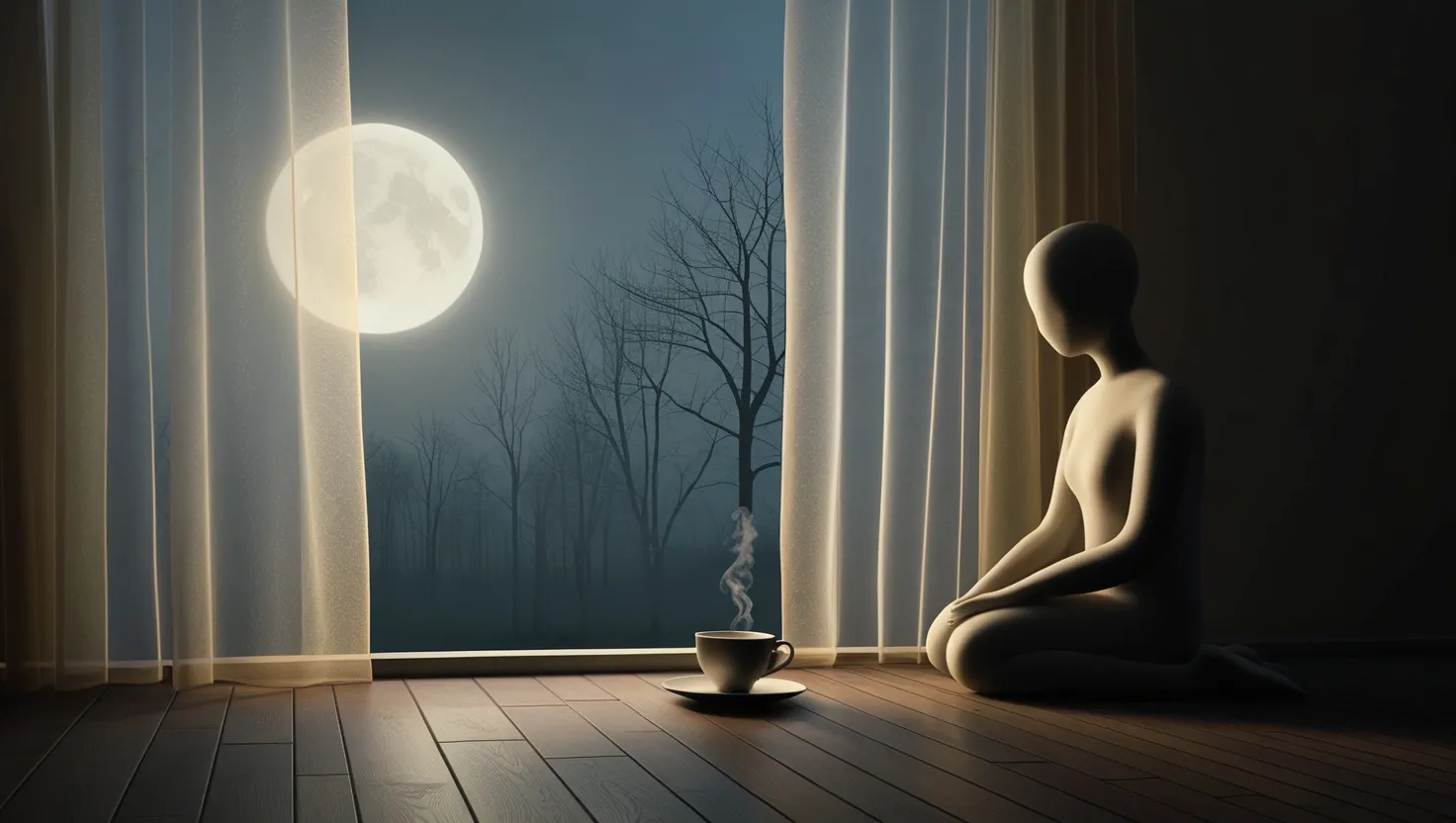
Try this: when you wake up tomorrow, before touching any device, sit near a window for five minutes. Watch the light. Listen to whatever sounds exist outside. Don’t try to think clearly or plan anything. Just let your mind exist without being asked to perform. This isn’t meditation with rules and breathing techniques. It’s simpler than that. It’s just being awake before being useful.
What happens physiologically is actually well-documented. The brain needs time to shift from its sleep state into alert function. When you rush that transition with screens and noise, you’re essentially forcing a cold engine to race. The Daoists didn’t know the neuroscience, but they knew the result — a person who starts quietly carries that quiet into everything else they do that day.
Have you ever noticed that you feel more exhausted after a day of multitasking than after a day of hard physical work?
That’s because scattered attention is metabolically expensive. The brain uses actual energy to switch between tasks, and it does so inefficiently. Every switch costs you something. The Daoist principle of wu wei addresses this directly, though it would never frame it in those terms. The idea is simple: move with the situation in front of you rather than forcing multiple situations to coexist.
Pick one task each day — just one — and do it with full attention but without aggression. No rushing toward the finish line. No obsessing over perfection. When you’re washing dishes, feel the water temperature, notice the weight of each item. When you’re writing, follow where the words want to go rather than bulldozing toward a word count. This sounds almost too relaxed to be effective. It isn’t. Single-focused attention consistently produces better output than divided effort, and it leaves you feeling less wrecked at the end of the day.
“Do you have the patience to wait until your mud settles and the water is clear?” — Lao Tzu, Tao Te Ching
Here’s something most people don’t know about ancient Daoist dietary thinking: it wasn’t a diet at all.
It was geography and timing turned into philosophy. Daoist practitioners ate what was available in their immediate surroundings, according to the season. Not because they were environmentalists ahead of their time, but because they genuinely believed the body functions as part of the natural world, not separate from it. Eating a mango in the middle of winter in northern China would have seemed as strange as wearing a winter coat to the beach.
You don’t need to overhaul your entire relationship with food. Just plan one meal a day around something that’s actually in season where you live right now. Go to a local market, see what’s there, and build something simple around it. What tends to happen is interesting — decision fatigue drops dramatically when you remove the illusion of infinite choice. Seasonal, local ingredients also tend to require less done to them to taste good. A ripe tomato in August needs almost nothing. That simplicity is the point.
Think about how you move between tasks throughout the day. Do you actually move, or do you just pivot from one screen to another?
Daoist masters were known for moving deliberately — unhurried steps, calm transitions, no frantic pivoting. This wasn’t performance. It was a form of continuous mindfulness that didn’t require sitting on a cushion to achieve. After finishing one task, they would physically move slowly and with awareness before beginning the next.
You can do this in thirty seconds. When you finish something, stand up slowly. Stretch if it feels natural. Walk to wherever you’re going next with actual attention on each step. This sounds trivially small, and it is. That’s the point. The gap between tasks is where attention gets most fragmented. Most people race through that gap and arrive at the next task already half-distracted. A slow, deliberate transition resets the mental state. It’s a tiny act that carries a disproportionate effect.
“The key is not to prioritize what’s on your schedule, but to schedule your priorities.” — Stephen Covey
Now, what about the end of the day?
Most people end their days the same way they start them — with a screen. The last thing seen before sleep is often a social media feed or a streaming service, which means the brain gets handed stimulation right when it needs the opposite. Daoist tradition held the transition from day to night as genuinely significant — not spiritually dramatic, just worth acknowledging. Activity gives way to rest. The active mind gives way to the quiet one.
Before you sleep, step outside or open a window. Look at the sky. Notice whether it’s cloudy or clear, whether you can see the moon, whether the air smells different from the afternoon. Don’t think about tomorrow’s schedule. Don’t review the day’s failures. Just notice that the day has ended and that rest is appropriate. This isn’t mystical. It’s a signal — to your nervous system, to your body — that the performance portion of the day is genuinely over.
Research on sleep quality consistently shows that the transition into sleep matters as much as the sleep itself. The Daoists would say the same thing with completely different language. Night is its own rhythm, and respecting it means something.
So why does any of this actually work?
The honest answer is that Daoist practices work because they stop fighting human nature instead of trying to override it. Every one of these five habits is built on the same recognition: you are part of a natural system, not a machine operating independently of it. When you align with that — when you sleep with darkness, eat with seasons, move without frenzy, and start and end the day with stillness — things get easier. Not because you’ve optimized yourself, but because you’ve stopped working against yourself.
“Simplicity is the ultimate sophistication.” — Leonardo da Vinci
There’s something almost rebellious about simplicity in an era that keeps asking for more output, more optimization, more speed. Choosing to sit quietly by a window for five minutes before checking your phone is, in a small but real way, a refusal to be rushed by forces that don’t have your interests at heart.
The ancient Daoists didn’t have notifications or commutes or quarterly targets. But they did have the same fundamental human problem: too much noise, not enough stillness. They built an entire philosophy around solving it. You don’t need to adopt the philosophy. You just need to try the practices. Start with one. See what happens. The water has to settle before you can see through it.