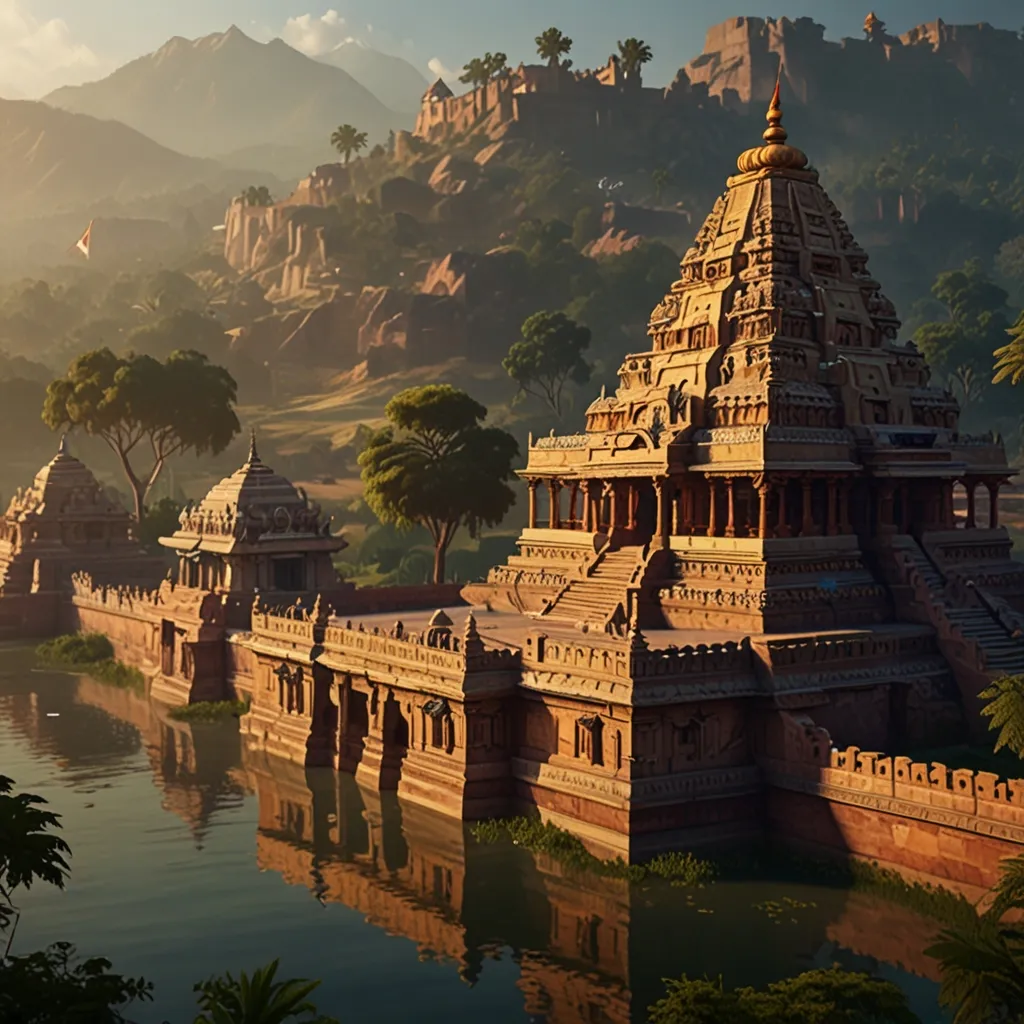
The Chola dynasty is super fascinating and a big deal in Indian history. Imagine a world buzzing with trade, brilliant architecture, and an insanely rich culture. The Cholas, who kicked off way back in the 3rd century BCE during the Mauryan Empire, truly rose to greatness around the 9th century CE.
Their roots were in the lush Kaveri River valley in southern India. Legends say they were descended from the Sun God, Surya. Pretty cool, right? Their early mentions come from inscriptions of Emperor Ashoka. Over centuries, they expanded their reach from Vaigai River in the south up to Tondaimandalam in the north.
One of the biggest stars of the Chola dynasty was Rajaraja Chola I, ruling from 985 to 1014 CE. Talk about a dynamic leader—he grew the empire to include parts of Karnataka, Kerala, northern Sri Lanka, and even islands like Lakshadweep and Maldives. These new territories helped them dominate trade routes and control connections with places like Southeast Asia, Arabia, and eastern Africa.
Rajaraja I left an unforgettable mark by building the stunning Brihadishvara temple in Thanjavur. This marvel is still one of the tallest temples in India and showcases the Cholas’ next-level architectural skills. Beyond being a place of worship, it was also a hub for economic activities, highlighting their unique governance style.
The Cholas were big on Saivism, focusing their devotion on Shiva. This religious passion led to the creation of the Saiva Siddhanta philosophy. Society was split into Brahmins and Non-Brahmins, with a bunch of gods and goddesses worshipped alongside Shiva. Their social structure was shaped by the caste system, and the devadasi practice emerged during this period.
The Chola period was like the golden era for Tamil literature. Works like Kamban’s Ramayan, Sekkilar’s Periyapuranam, and Kalladanar’s Kalladam flourished. Tamil thrived, but they didn’t stop there—the Cholas also supported Sanskrit literature. An impressive collection of Tamil verses, the Nalayira Divya Prabandham, emerged during this time.
They were known for their super organized revenue admin, village self-governance, and top-tier irrigation systems. Local administration was their thing, and temples weren’t just religious spots—they served as schools and secure places during wars and political chaos.
Rajaraja I’s successors kept the momentum going. His son, Rajendra Chola I, expanded the empire even more, grabbing parts of the Malay Peninsula and Malay Archipelago. He even fetched Ganges water to the new capital, Gangaikondacholapuram. This era is often called the golden age of the Cholas.
But all good things come to an end. By the 12th and 13th centuries, the Chola dynasty started to decline. The Hoysala dynasty in the west and Pandya dynasty in the south began chipping away at their territory. The end for the Cholas came in 1279 when Rajendra Chola III was defeated by Maravarman Kulasekara Pandyan I.
Yet, the Cholas left a lasting legacy in architecture, literature, and governance that continues to amaze and inspire. Their contributions are a proud chapter in Indian history, reflecting the brilliance and cultural wealth of their era.