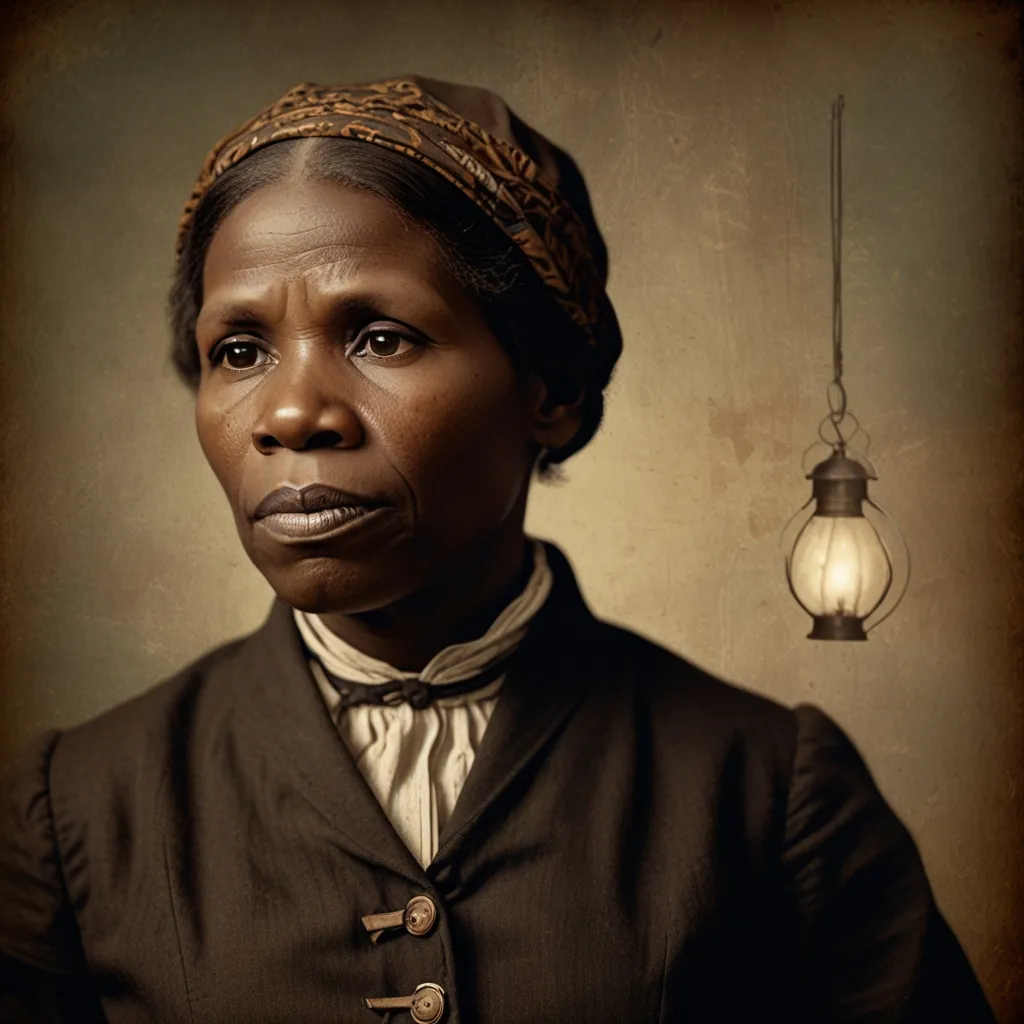
Harriet Tubman, one of the most iconic figures in American history, was born into slavery in Maryland around 1820. Her original name was Araminta Ross, and she later adopted her mother’s first name, Harriet. Born to Benjamin Ross and Harriet “Rit” Green, Tubman’s early life was marked by hard labor and cruelty. At just five years old, she began working as a house servant, and by the time she was twelve, she was sent to work in the fields.
Tubman’s life took a dramatic turn when she suffered a severe head injury while trying to protect another slave from an overseer. The overseer threw a two-pound weight at the other slave, but it struck Tubman instead. This injury left her with lifelong seizures and spells of deep sleep. Despite this, Tubman’s spirit remained unbroken.
In 1844, Tubman married John Tubman, a free black man. However, when she heard rumors that she was to be sold to a plantation in the Deep South, she decided to escape. In 1849, she set out on foot, following the North Star to Pennsylvania and eventually to Philadelphia. This journey was just the beginning of her remarkable story.
Tubman returned to Maryland multiple times, risking her life to rescue her family and other slaves. She became known as the “Moses of her people” for her bravery and determination. Her methods were clever and resourceful; she used the master’s horse and buggy for the initial part of the journey and traveled on Saturday nights to avoid detection. She even carried a drug to quiet babies and a gun to threaten any fugitives who wanted to turn back.
By 1856, Tubman’s capture would have brought a $40,000 reward from the South. Yet, she continued her dangerous missions, earning the respect of abolitionists like Frederick Douglass and John Brown. Brown, who planned the raid on Harpers Ferry, referred to her as “General Tubman” due to her bravery and strategic thinking.
Tubman’s work didn’t stop there. During the Civil War, she served the Union as a cook, nurse, and spy. Her intelligence gathering was crucial for the Union forces, helping them plan successful attacks. After the war, she settled in Auburn, New York, where she continued her philanthropic work, founding the Harriet Tubman Home for Aged and Indigent Negroes.
Tubman’s later life was marked by her continued fight for justice. She supported women’s suffrage and applied for a federal pension for her wartime service. Though she faced many challenges, her legacy as a hero and a symbol of freedom has endured. Harriet Tubman died in 1913, but her story continues to inspire generations.
In summary, Harriet Tubman, originally Araminta Ross, was a true American hero. Her journey from slavery to freedom and her relentless efforts to help others escape the same fate make her one of the most remarkable figures in history. Her bravery, intelligence, and unwavering commitment to justice have left an indelible mark on the world.