India’s journey to independence from Britain was a long and arduous one, marked by significant events and figures that shaped the nation’s history. The year 1947 stands out as a pivotal moment when India finally gained its freedom.
The roots of India’s struggle for independence date back to the early 19th century. The British East India Company, which had been expanding its influence in India since the 1600s, eventually led to the British government taking direct control over the subcontinent. This period, known as the British Raj, began in 1858 following the Sepoy Mutiny, a rebellion by Indian soldiers against British rule.
The Sepoy Mutiny was sparked by religious grievances and the use of animal products in ammunition, which offended both Hindu and Muslim soldiers. This uprising, though ultimately unsuccessful, marked the beginning of a unified resistance against British rule. The British Raj continued to govern India, but the seeds of independence had been sown.
In the late 19th and early 20th centuries, the Indian National Congress emerged as a key force in the independence movement. Founded in 1885, it initially aimed to reform British rule but eventually became a powerful advocate for full independence. Leaders like Mahatma Gandhi and Jawaharlal Nehru played crucial roles in this movement.
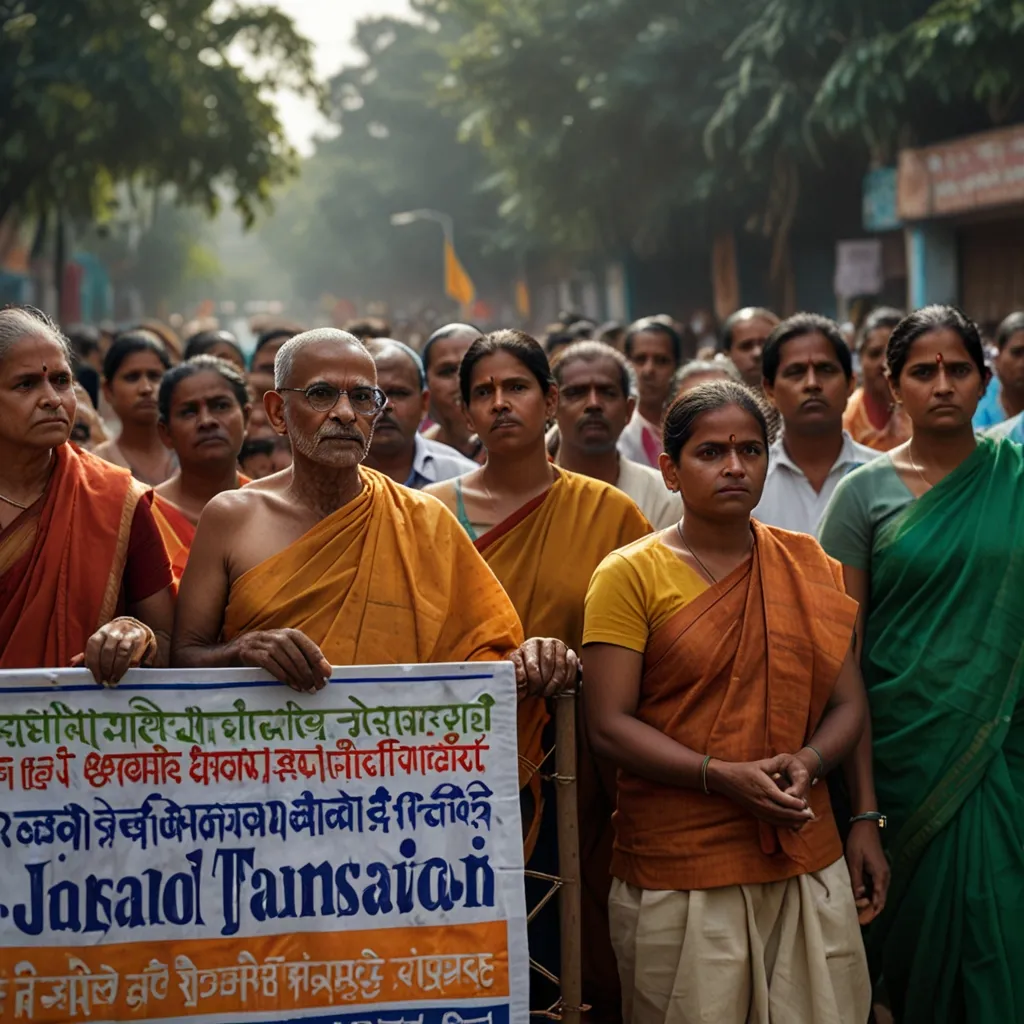
Gandhi’s non-violent resistance, inspired by his experiences in South Africa, became a hallmark of the Indian independence movement. His Non-Cooperation Movement, launched in 1920, encouraged Indians to boycott British goods and institutions, gaining widespread support and attention. Gandhi’s philosophy of non-violence influenced movements worldwide and remains a symbol of peaceful resistance.
The Jallianwala Bagh Massacre in 1919, where British troops fired on unarmed Indian protesters, further galvanized the independence movement. This tragic event highlighted the brutal nature of British rule and strengthened the resolve of Indians to fight for their freedom.
The final push for independence came in the 1940s. The Indian Independence Act of 1947 was passed, paving the way for India and Pakistan to become independent nations. On August 15, 1947, India celebrated its independence, with Jawaharlal Nehru becoming the first Prime Minister. Pakistan gained independence a day earlier, on August 14, 1947.
However, the partition of India and Pakistan was not without its challenges. The division along religious lines led to one of the largest mass migrations in history, with over 10 million people moving across the newly drawn borders. This period was marred by communal violence, resulting in the deaths of nearly a million people.
Despite these challenges, India’s independence marked a significant milestone in its history. The country adopted a democratic constitution in 1950, establishing a parliamentary system of government. India has since maintained its democratic traditions, making it a unique example among newly independent nations.
In conclusion, India’s independence from Britain in 1947 was the culmination of decades of struggle and resistance. From the early rebellions to the non-violent movements led by Gandhi, the journey was long and fraught with challenges. Today, India stands as a testament to the power of peaceful resistance and the enduring spirit of its people.