What Secrets Did the Hundred Years' War Reveal About Europe's Turbulent Past?
Generations of Siege and Triumph: Europe Transformed by Hundred Years' War
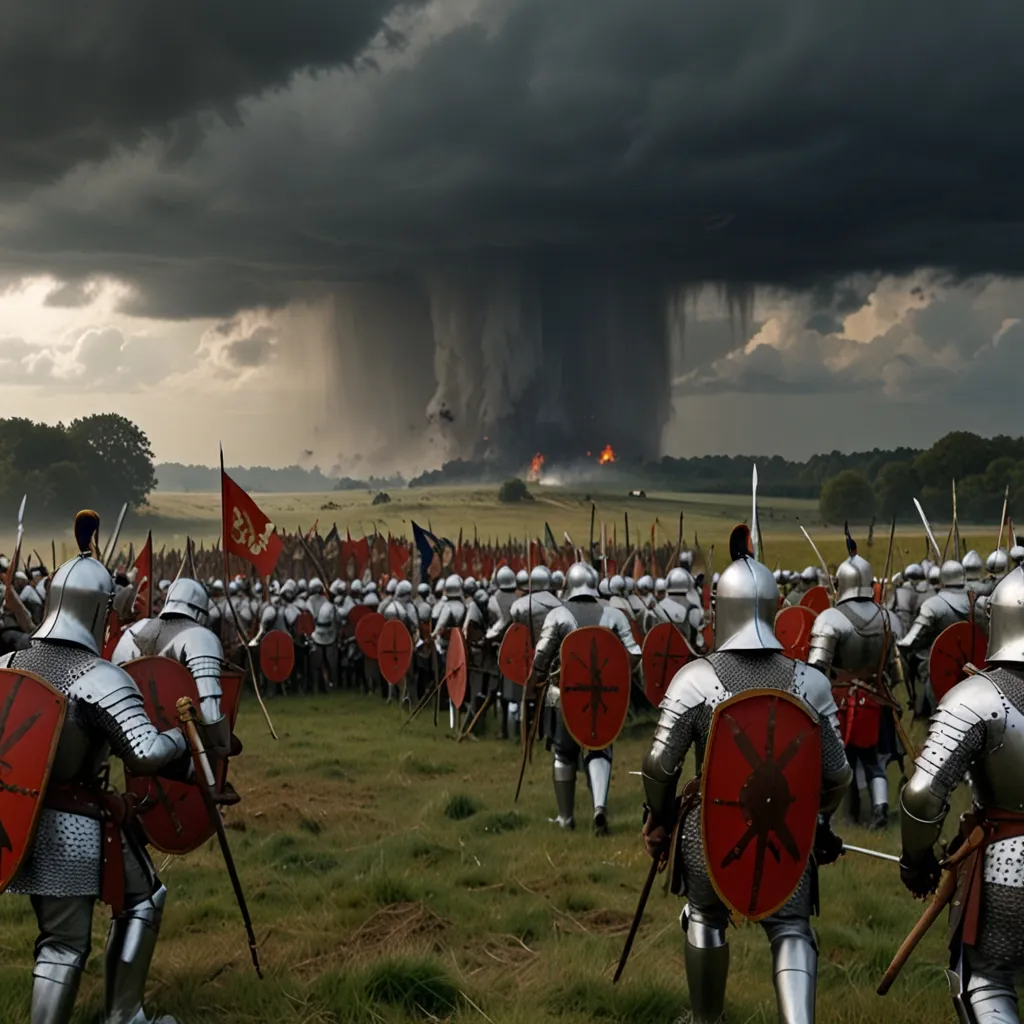
The Hundred Years’ War was a long and complex conflict that lasted from 1337 to 1453. It was a struggle between the kingdoms of England and France, with roots in feudal disputes and claims to the French throne. This war was not just a simple battle between two nations; it involved multiple generations of kings and nobles, as well as various factions from across Western Europe.
The war began when Edward III of England claimed the French throne, which was then held by Philip VI. This claim was based on Edward’s descent from Philip IV of France through his mother, Isabella. The French, however, did not recognize Edward’s claim, leading to a series of military confrontations.
One of the most famous figures of the Hundred Years’ War is Joan of Arc, who played a significant role in the French resistance against the English. She led the French army to several victories, including the capture of Orléans, which had been under siege by the English for over a year. Despite her eventual capture and execution by the English, Joan of Arc became a symbol of French resistance and a national heroine.
Another key figure was Henry V of England, who is known for his military prowess and his victory at the Battle of Agincourt. This battle, fought in 1415, was a significant English victory despite being heavily outnumbered. Henry V’s military campaigns in France were successful, and he even married Catherine of Valois, the daughter of Charles VI of France, securing a claim to the French throne.
The Hundred Years’ War was not just about kings and nobles; it also involved ordinary people who suffered greatly during the conflict. The war disrupted trade, agriculture, and daily life, leading to widespread poverty and famine. The Black Death, which occurred during this period, further exacerbated the suffering of the common people.
The war was fought in several phases, with periods of relative peace punctuated by intense fighting. The Edwardian War (1337–1360), the Caroline War (1369–1389), and the Lancastrian War (1415–1453) are the three main phases of the conflict. Each phase saw significant battles and shifts in power between the English and French.
The French eventually emerged victorious, with the expulsion of the English from France in 1453. The Battle of Castillon is considered the last battle of the Hundred Years’ War, marking the end of English claims to the French throne. The war had a lasting impact on European history, leading to the development of professional armies and the decline of chivalry.
The Hundred Years’ War also saw the rise of nationalism in both England and France. The conflict strengthened the sense of national identity in both countries, laying the groundwork for their future roles as global powers. The war’s legacy can still be seen today, with the English and French monarchies remaining separate entities despite historical claims and alliances.
In summary, the Hundred Years’ War was a complex and multifaceted conflict that involved political, military, and social dimensions. It was a defining period in European history, shaping the future of both England and France and leaving a lasting impact on warfare and national identity.