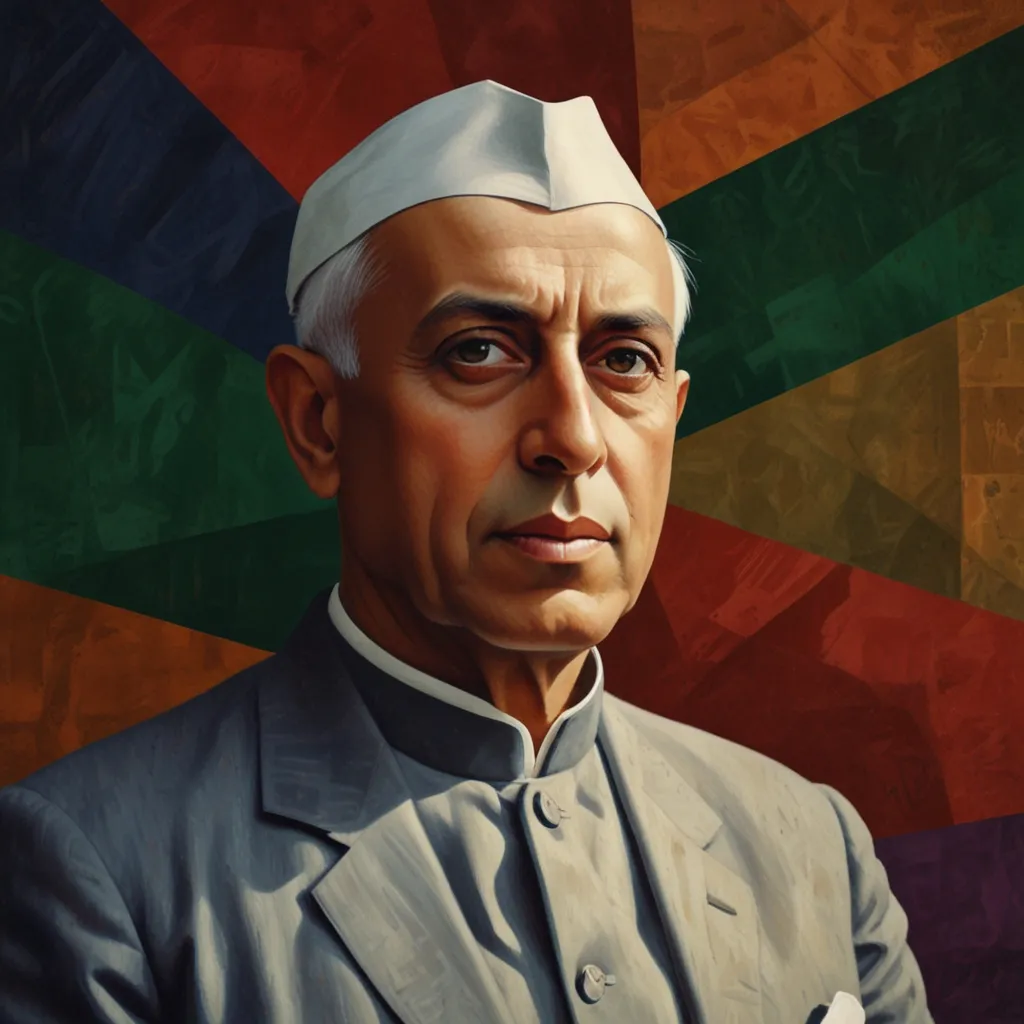
Jawaharlal Nehru, often called Pandit Nehru, was India’s first Prime Minister, starting on August 15, 1947. He led until he passed away in 1964. Nehru was a big player in India’s fight for independence from British rule and was a top leader in the Indian National Congress.
Born on November 14, 1889, in Allahabad, India, Nehru was the eldest of four kids. His dad, Motilal Nehru, was a famous lawyer and an important figure in the independence movement. Nehru’s upbringing included home tutoring by English governesses and tutors till he was 16, followed by studies at Harrow School in England. He later majored in natural science at Trinity College, Cambridge, and qualified as a barrister in London.
His time in England made him feel out of place in both India and England, which influenced his political ideas and leadership. Returning to India in 1912, he started practicing law but soon shifted focus to politics.
In 1916, Nehru married Kamala Kaul, and they had a daughter, Indira Priyadarshini, who later became India’s first female Prime Minister. Nehru’s political journey gained momentum when he joined the Indian National Congress, greatly influenced by Mahatma Gandhi. Nehru became a key figure in the independence movement, suffering imprisonment by the British multiple times, including during World War II.
As Prime Minister, Nehru created a parliamentary government and pushed policies towards a socialistic society. His neutralist foreign policy meant that India stayed unaligned during the Cold War, maintaining good relations with both the U.S. and the Soviet Union.
Nehru was also a dedicated writer. One of his notable books, “The Discovery of India,” was written in prison and delves into India’s history, culture, and philosophy, reflecting his deep love for his country and his hopes for its future as a free and democratic nation.
His legacy isn’t just political; he was vital in establishing educational and scientific institutions in India. He founded the Indian Institutes of Technology and the Indian Space Research Organisation, believing that education and science were key to India’s growth.
Though Nehru achieved much, his time in office wasn’t without challenges. He had to unite over 500 princely states into the new Indian Union, deal with the aftermath of the partition with Pakistan, and navigate tricky international relations during a tense global period.
Nehru passed away on May 27, 1964, but his impact on India and the world is still felt. He is remembered as a visionary leader who laid the groundwork for India’s progress into a global power, with a firm belief in democracy, education, and scientific advancement that’s still inspiring today.
In essence, Jawaharlal Nehru was a complex leader who was crucial in leading India to independence and in shaping its early years as a free nation. His political expertise, writing skills, and vision for a modern India have left a lasting legacy that continues to guide the country’s future.