history

What Can Modern Societies Learn From the Timeless Influence of the Roman Empire?

Echoes of Rome: How an Ancient Empire Shapes Our Modern World

What Can Modern Societies Learn From the Timeless Influence of the Roman Empire?

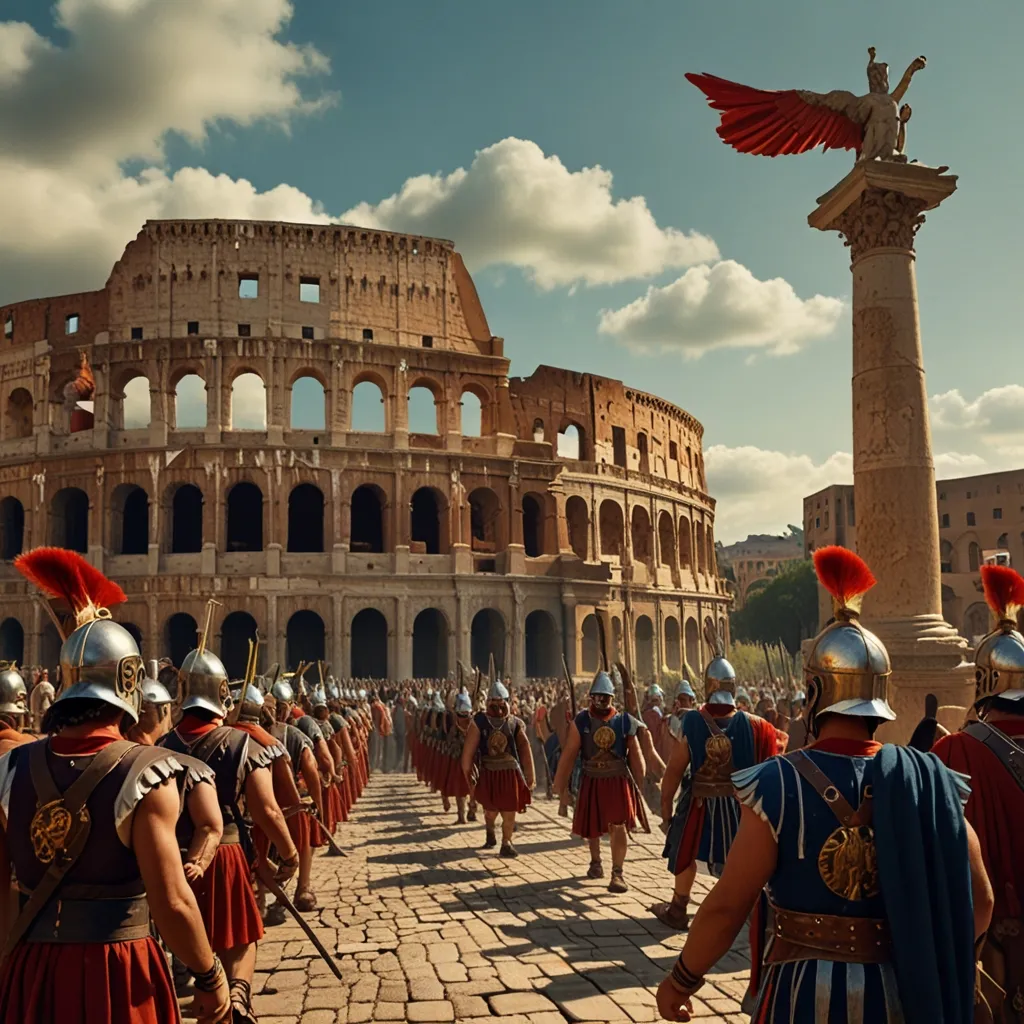
The Roman Empire is often regarded as the largest and most enduring empire in history. It began its expansion in the last centuries BC by conquering its Italian neighbors and continued to exist in various forms for over 1,000 years. The Roman Empire’s influence was so profound that it became a model for many later empires, including those of Austria, France, and Mexico. The Roman eagles, symbols of power, were adopted by numerous subsequent empires, and the Roman fasces, an axe enclosed in a bundle of rods, are still seen in the US House of Representatives and the Sheldonian Theatre in Oxford.

The Roman Empire’s survival is a testament to its robust political and administrative systems. The imperial monarchy established by Augustus at the turn of the millennium was a structure that many later empires imitated. The title of Czar, used by Slavic rulers, is a distant echo of Caesar. The empire’s legacy extends beyond political structures; it also influenced art, architecture, and literature. The Roman Triumph, a grand ceremony celebrating military victories, was a spectacle that combined savagery and ceremonial grandeur, reshaping the city’s religion and monuments with each generation.

The Roman Empire’s impact on modern society is still evident. The legal systems of many countries, including the United States, are based on Roman law. The concept of citizenship, which was a cornerstone of Roman society, has been adopted by many modern nations. The Roman language, Latin, is still studied in schools and used in legal and scientific terminology. The architectural achievements of the Romans, such as the Colosseum and the Pantheon, continue to inspire architects around the world.

Despite its grandeur, the Roman Empire faced numerous challenges and eventually declined. The fall of the Western Roman Empire in the 5th century AD marked the end of an era, but the Eastern Roman Empire, also known as the Byzantine Empire, continued until its capital, Constantinople, was conquered by the Ottoman Turks in 1453 AD. The legacy of the Roman Empire, however, lives on through its enduring influence on modern society, politics, and culture.

In summary, the Roman Empire stands as a monumental example of historical grandeur and enduring influence. Its political, legal, architectural, and cultural achievements continue to shape the world we live in today.

Keywords: Roman Empire, historical grandeur, enduring influence, political systems, Roman law, Roman architecture, Czar origins, citizenship concept, Roman language, Byzantine Empire


Similar Posts
Blog Image
Moon Farming Breakthrough: NASA's Plan to Grow Food in Space Revealed

Lunar agriculture aims to grow food on the Moon, tackling challenges like toxic soil and harsh conditions. Scientists are developing innovative techniques, including soil detoxification and hydroponic systems. These efforts not only support space exploration but also offer insights for Earth's agriculture. Experiments like LEAF and research on recycling waste into nutrients are paving the way for sustainable food production in space and improving crop resilience on Earth.

Blog Image
5 Ancient Pandemics That Shaped World History Without You Knowing

Discover how 5 forgotten pandemics shaped economies, politics, and culture throughout history. Learn surprising connections between ancient disease outbreaks and modern society in this fascinating historical analysis. Read more now!

Blog Image
Forgotten by History: The Hero Who Saved Millions and Was Erased

Bill Tutte, unsung WWII hero, cracked Hitler's Lorenz cipher without seeing the machine. His work saved lives, shortened the war, and advanced mathematics, but remained secret for decades.

Blog Image
The Mysterious Taos Hum: Why Only 2% Can Hear This Baffling Sound

The Taos Hum is a mysterious low-frequency sound heard by 2% of Taos, New Mexico residents. Its origin remains unknown despite extensive research. Theories range from industrial activity to geological factors and even psychological explanations. The hum affects quality of life for those who hear it, causing health issues and frustration. Similar phenomena exist worldwide, highlighting the complexity of sound perception and environmental mysteries.

Blog Image
What Makes the Role of an Indian State Governor So Intriguing?

The State Guardian and National Sympathizer: The Intricate Dance of a Governor’s Role

Blog Image
5 Historic Voyages That Changed Global Trade Forever: From Dias to Cook's Revolutionary Impact

Discover how 5 historic voyages by Dias, Columbus, Magellan, Manila Galleons & Cook connected worlds, reshaping trade, culture & daily life forever.