Green Bank: Where Silence Reigns and Aliens Might Call - A Tech-Free Town's Quest
Green Bank, West Virginia: a unique town in the National Radio Quiet Zone, home to the world's largest steerable radio telescope. With strict limits on radio emissions, it's crucial for SETI research. The Green Bank Telescope searches for extraterrestrial signals, including the WOW Signal, using advanced techniques and AI. This isolated community blends rural life with cutting-edge astronomy.
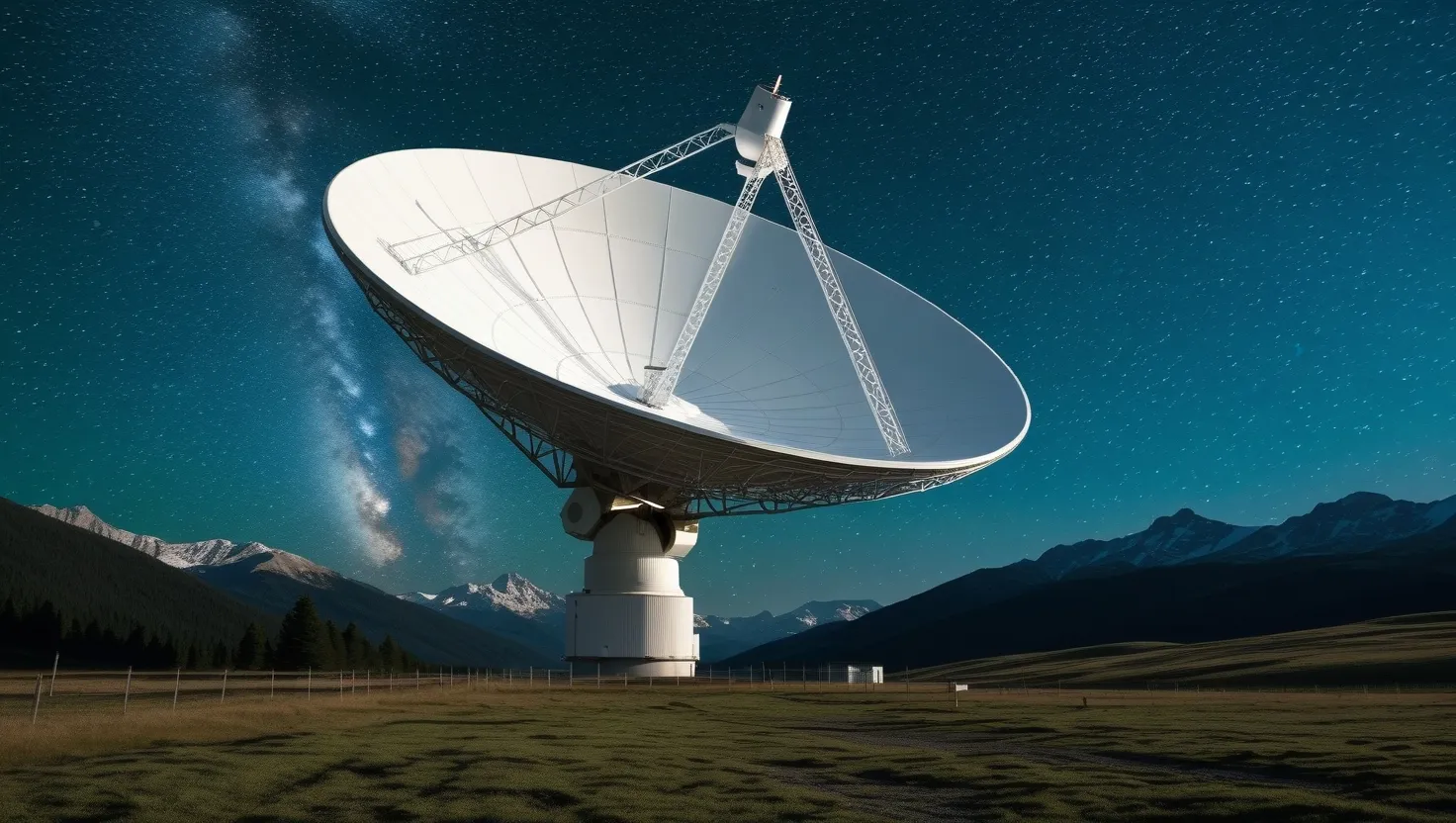
In the heart of West Virginia, nestled in the Appalachian Mountains, lies a small town that is as unique as it is remote. Green Bank, with its population of just a few hundred residents, is not your average rural American town. Here, the air is crisp, the skies are clear, and the silence is almost palpable – a silence that is not just a natural phenomenon but a carefully enforced rule.
Green Bank is home to the world’s largest fully steerable radio telescope, the Green Bank Telescope, a behemoth of modern astronomy that stands tall amidst the rolling hills and dense forests. This telescope is part of the Green Bank Observatory, a facility that has been at the forefront of the search for extraterrestrial intelligence (SETI) for decades.
The reason Green Bank is so crucial for this endeavor is its location within the National Radio Quiet Zone. This zone, which spans over 13,000 square miles, is a region where radio emissions are strictly limited to prevent interference with the sensitive equipment at the observatory. Imagine a place where cell phones are a rarity, where Wi-Fi is a luxury, and where even microwaves are banned – this is Green Bank.
Living in this tech-restricted bubble can be both fascinating and challenging. Residents here have grown accustomed to the quiet, often relying on landlines and face-to-face interactions. It’s a lifestyle that seems almost antiquated in today’s digital age, yet it’s one that fosters a sense of community and simplicity that is hard to find elsewhere.
For scientists, however, this quiet zone is a goldmine. The Green Bank Telescope, with its 328-foot diameter dish, is capable of detecting the faintest radio signals from distant stars and galaxies. It’s a tool that has been used in some of the most ambitious SETI projects, including the Breakthrough Listen initiative, a $100 million effort to search for intelligent extraterrestrial communications.
One of the most intriguing aspects of the Green Bank Telescope’s work is its involvement in the search for the infamous WOW Signal. This signal, detected in 1977 by Ohio State University’s Big Ear radio telescope, remains one of the most compelling examples of an unexplained signal that could potentially be of extraterrestrial origin. In 2022, the Green Bank Telescope, in collaboration with the Allen Telescope Array, conducted the first targeted search for this signal, focusing on a Sun-like star located 1,788 light-years from Earth. Although the search did not yield any technosignatures, it marked a significant milestone in the coordinated effort to find signs of intelligent life beyond our planet.
The telescope’s capabilities are not limited to searching for signals from distant stars. It is also involved in cutting-edge research techniques, such as using planet-planet occultations (PPOs) to detect potential radio signals from exoplanets. This method involves observing the alignments of planets in other star systems, looking for any signal leakage that could indicate intelligent life. While these searches have not yet yielded definitive evidence, they represent a new frontier in SETI research, leveraging advanced signal-filtering software and the enhanced capabilities of the Allen Telescope Array.
Artificial intelligence (AI) has also become a crucial tool in the search for extraterrestrial signals. Researchers have developed AI systems that can sift through vast amounts of data collected by the Green Bank Telescope, identifying patterns that could indicate technosignatures. One such AI system, created by Peter Ma and his team, has flagged several signals that, while intriguing, remain unconfirmed as extraterrestrial in origin. These signals, detected from stars located 30 to 90 light years away, exhibit characteristics that distinguish them from local interference, but further observations are needed to confirm their nature.
The integration of AI into SETI research is a game-changer. It allows scientists to process data at speeds and scales that were previously unimaginable. For instance, Ma’s AI system analyzed over 150 terabytes of data from the Green Bank Telescope, identifying thousands of signals of interest, of which eight showed promising characteristics. While these signals were not re-detected in follow-up observations, the method itself is a significant advancement, highlighting the potential of AI in accelerating the search for extraterrestrial life.
Living in Green Bank, one can’t help but feel a sense of awe and wonder at the vastness of the universe and the mysteries it holds. The town’s isolation and the strict rules governing radio emissions create an environment that is both surreal and fascinating. Here, the boundaries between rural American life and cutting-edge astronomy blur, making it a unique place where the past and the future coexist.
As I walk through the quiet streets of Green Bank, I am reminded of the endless fascination humans have with the possibility of alien contact. It’s a quest that has captivated scientists and the general public alike for decades, driven by a deep-seated curiosity about our place in the universe. The Green Bank Telescope stands as a testament to this curiosity, a symbol of human ingenuity and the relentless pursuit of knowledge.
In this small town, where the night sky is unpolluted by city lights and the air is free from the hum of technology, one can almost hear the silence of the universe. It’s a silence that is both profound and haunting, a reminder that we are but a small part of a vast, unexplored cosmos. And yet, it is in this silence that we find the hope and the determination to keep listening, to keep searching for that elusive signal that could change our understanding of the universe forever.