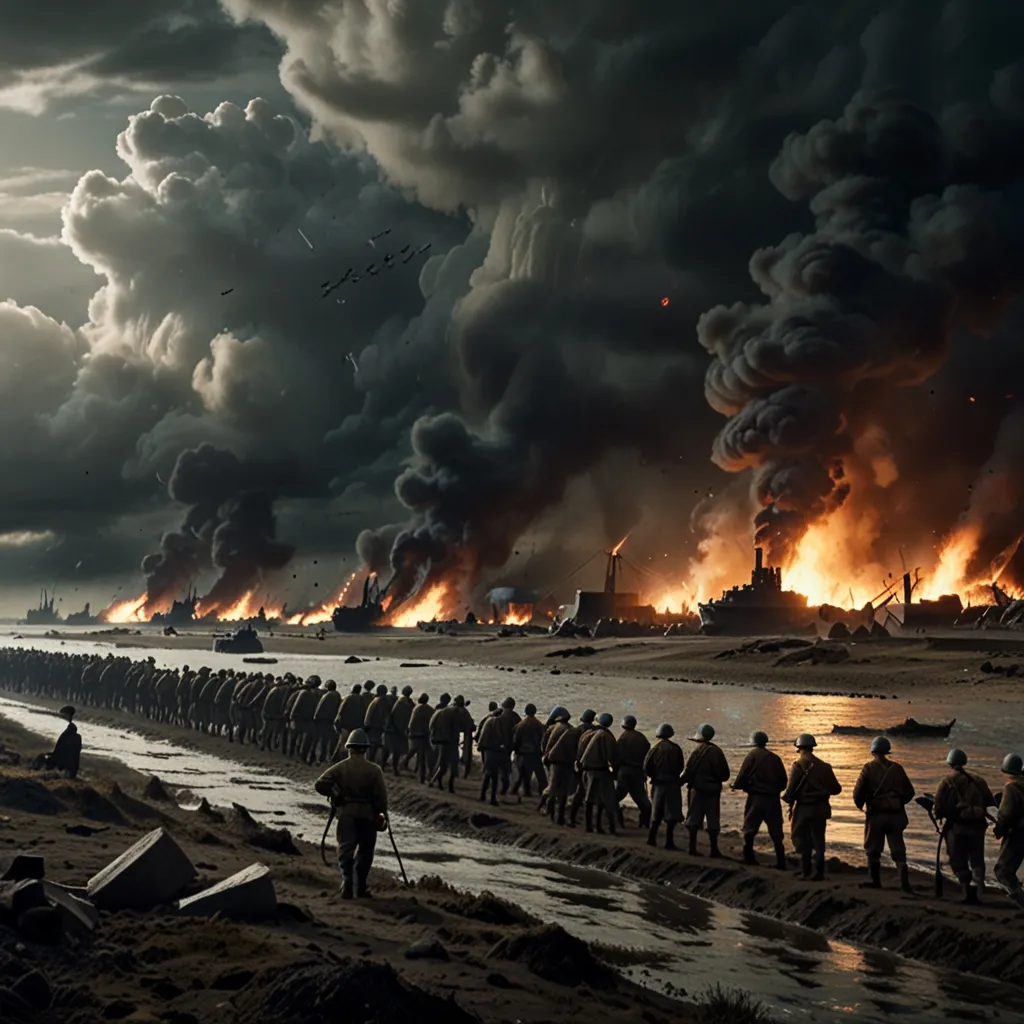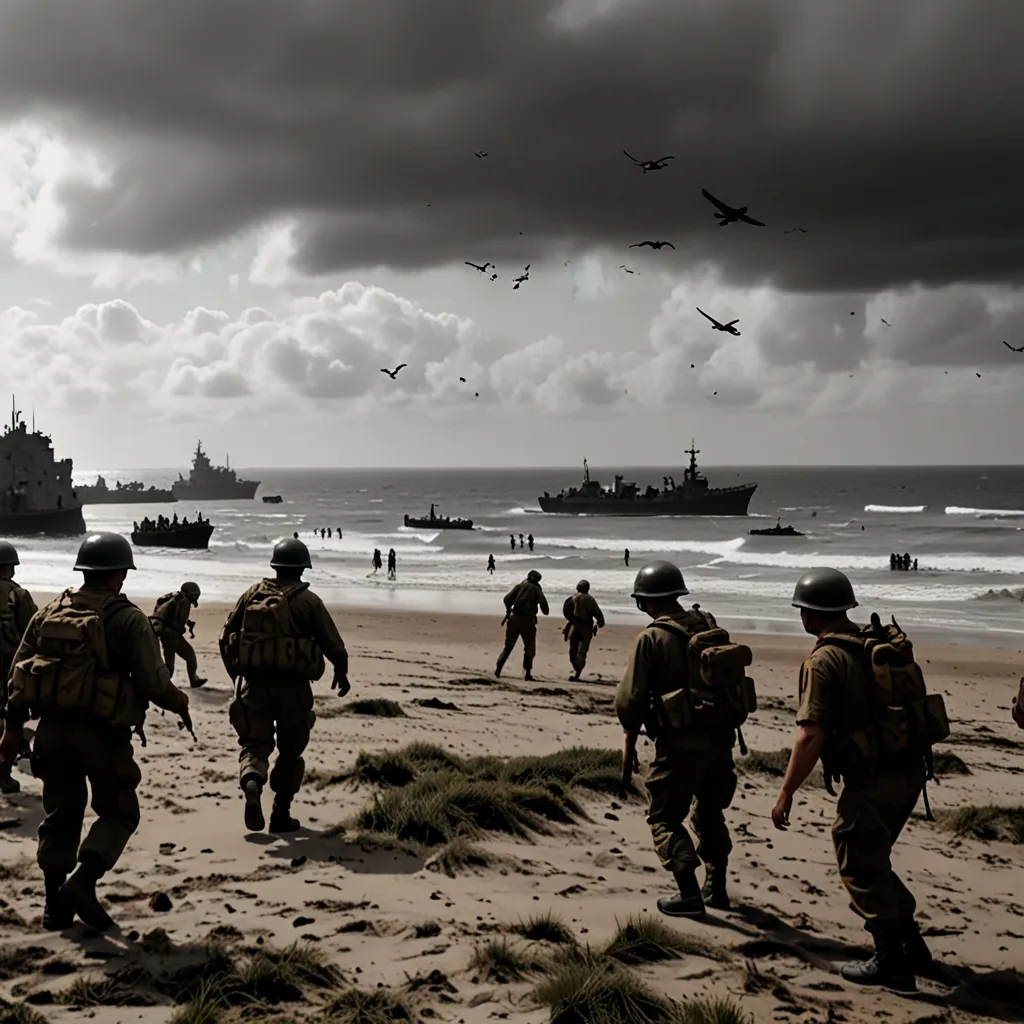
Normandy is a region in northern France. During World War II, it was the site of one of the most significant military operations in history, known as D-Day. On June 6, 1944, Allied troops stormed the beaches of Normandy in an effort to liberate Western Europe from Nazi occupation.
The invasion, code-named Operation Overlord, involved a massive force of over 7,000 naval vessels and 12,000 aircraft. The Allies had been planning this operation for two years, with extensive training and a sophisticated deception effort to mislead the Germans about the true invasion site. The operation was led by General Dwight D. Eisenhower, who made the final decision to proceed with the invasion on June 5, 1944.
The invasion began with airborne troops parachuting into Normandy just after midnight. These troops were tasked with securing key positions and protecting the flanks of the landing forces. At dawn, amphibious assault troops landed on five beaches: Utah, Omaha, Gold, Juno, and Sword. American troops landed at Utah and Omaha, British troops at Gold and Sword, and Canadian troops at Juno.
The Germans, though caught by surprise, fought fiercely. The battle on Omaha Beach was particularly intense, with American troops suffering heavy casualties. Despite these challenges, the Allies managed to establish a foothold on the continent by the end of the day. By nightfall, nearly 160,000 Allied troops had landed in Normandy, with over 10,300 casualties.
The success of D-Day marked the beginning of the end of Nazi control in Western Europe. Over the following weeks, the Allies continued to pour troops and supplies into Normandy, eventually breaking out of the beachhead and advancing across France. By August 1944, northern France was liberated, and the Allies were poised to push into Germany.
The Normandy invasion was an international effort, involving troops from the United States, the United Kingdom, Canada, and other Allied nations. The operation required unprecedented cooperation and coordination among the Allied forces. The sheer scale of the operation, with its massive naval and air support, made it the largest amphibious invasion in history.
The German defenses, known as the Atlantic Wall, were formidable but ultimately insufficient to stop the Allied advance. The Allies’ control of the skies and their ability to maintain a steady supply of troops and equipment were crucial factors in their success.
D-Day was a turning point in World War II, marking the beginning of the end of Nazi dominance in Europe. The bravery and sacrifice of the Allied troops who landed on the beaches of Normandy will always be remembered as a pivotal moment in history.