Did India's Emergency Era Deliver Progress or Just Pain?
How India's Emergency Era Altered the Landscape of Liberty and Governance
The Emergency in India from June 25, 1975, to March 21, 1977, was a crazy time. Prime Minister Indira Gandhi declared it, saying the country faced internal threats. What happened next? Civil liberties were put on hold, the press got censored, and political foes were thrown into jail.
Indira Gandhi’s growing political control was a big reason behind the Emergency. She had major sway in the government and Parliament, and she used this power to get things done her way, even changing the Constitution to give herself more control.
This period changed many things in India. Sure, some say it made government services work better—trains and airplanes ran on time, and ration shops had essential items. But these so-called benefits came at a huge cost: people’s freedom and human rights got trampled.
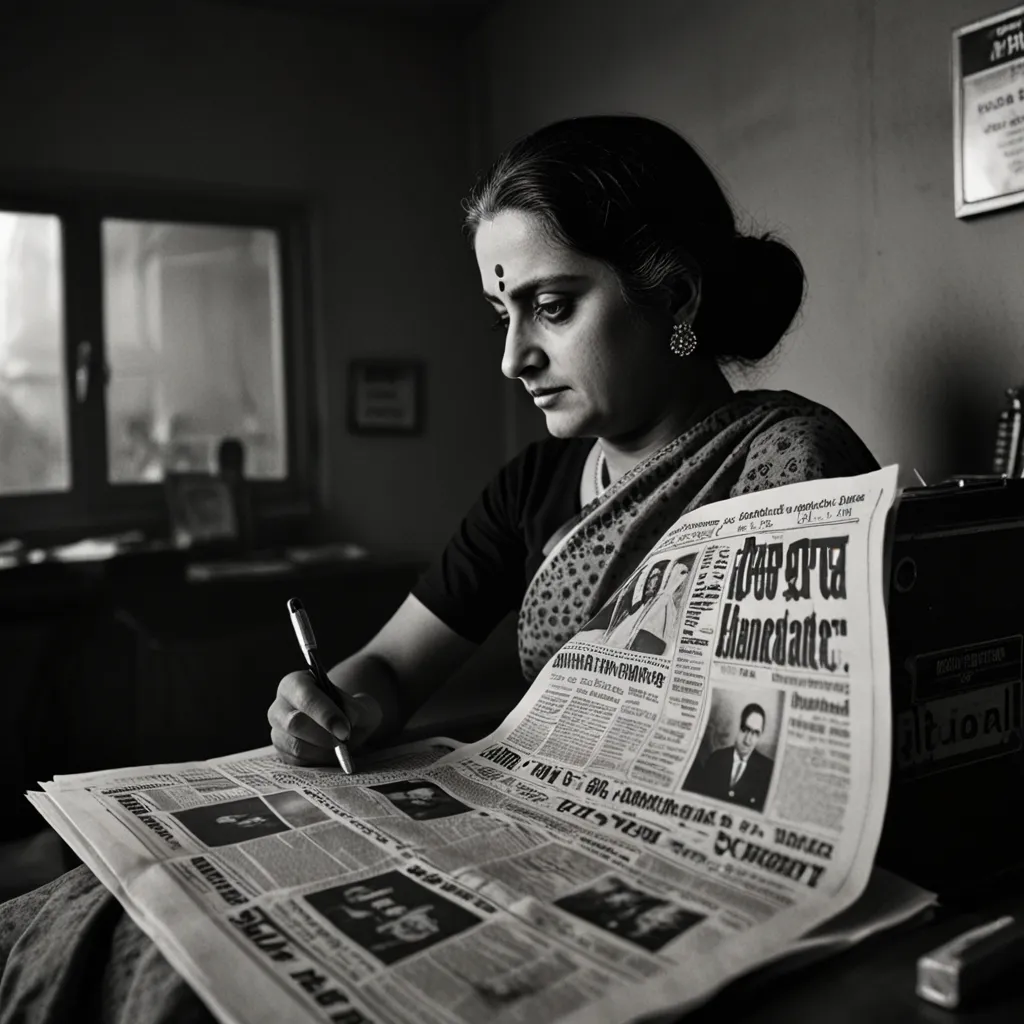
One of the most shocking things was the forced sterilization campaign led by Sanjay Gandhi, Indira’s son. It was meant to control the population but turned into a nightmare because of its brutal methods. The press was also heavily censored, with blank spaces showing up in newspapers when they couldn’t print what they wanted.
Despite all the repression, the Emergency did leave some lasting marks. TV became more widespread in India, thanks to new stations and cheaper sets. This was part of the Satellite Instructional Television Experiment (SITE), which kick-started India’s satellite program.
Books and literature of the time often critiqued the harshness of the Emergency. Novels like Salman Rushdie’s “Midnight’s Children” and Rohinton Mistry’s “A Fine Balance” capture the chaos and personal stories from this period.
The Emergency shook up Indian politics for good. Opposition movements like the JP Movement led by Jayaprakash Narayan gained ground against Indira’s rule. It also prompted a closer look at the Constitution, with the Supreme Court later ruling that some changes couldn’t mess with its basic structure.
In the end, the Emergency of 1975-77 was a mixed bag. While there were some gains in efficiency and technology, the period was marred by severe political repression and human rights abuses. Its legacy still shapes Indian politics today, a stark reminder of why democratic freedoms and the rule of law really matter.