Did Enemies Become Friends During World War I's Christmas Truce?
Soldiers Conjure Peace from the Trenches, Sculpting Humanity Amidst War
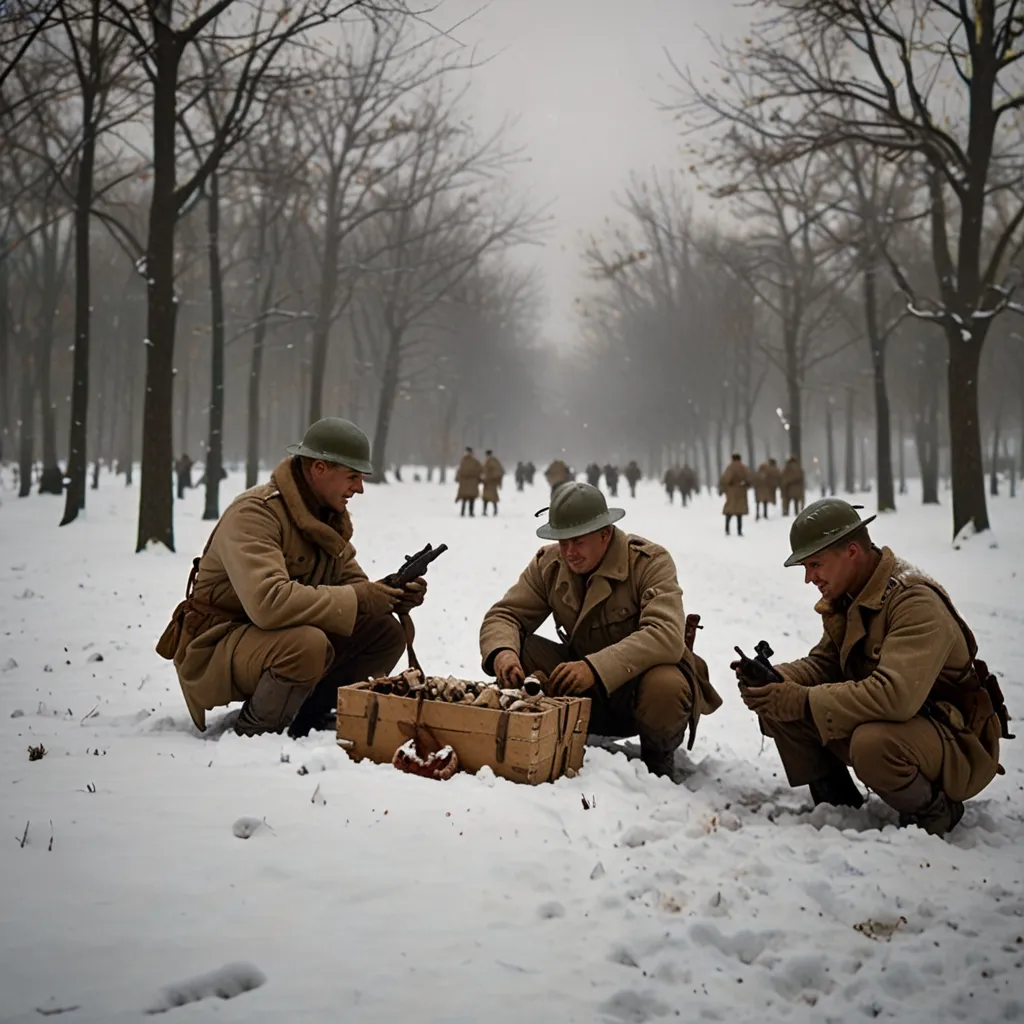
The Christmas Truce was a remarkable event that took place during World War I. It was an unofficial and spontaneous ceasefire that occurred along the Western Front on December 24 and 25, 1914. This unique event saw soldiers from both the Allied and German forces laying down their weapons and engaging in acts of goodwill and friendship.
The war had started just a few months earlier, in the summer of 1914, with many believing it would be over by Christmas. However, by December, the reality of trench warfare had set in. The trenches were cold, muddy, and miserable, with soldiers on both sides facing each other in close proximity. Despite the harsh conditions, the holiday season brought a sense of nostalgia and longing for peace.
Pope Benedict XV had called for a formal truce, but it was ignored by the leaders of the warring nations. Instead, it was the soldiers themselves who took the initiative. German soldiers began decorating their trenches with Christmas trees and singing carols. British soldiers responded with their own carols, and soon, both sides were exchanging gifts and stories.
The truce was not universal; it did not occur in all parts of the front. However, in many areas, soldiers crossed into no man’s land to mingle, share food, and even play games together. There were reports of joint burial ceremonies and prisoner swaps. The truce was most successful where British troops faced Saxon regiments, known for their friendly and trustworthy nature.
The Christmas Truce was a brief respite from the horrors of war. It highlighted the contrast between the spirit of Christmas and the reality of conflict. As the war progressed, it became clear that such a truce would not be repeated. Commanders on both sides took steps to prevent any further fraternization, recognizing that it undermined the morale and aggression needed to continue fighting.
Despite its uniqueness, the Christmas Truce was not an isolated event in history. There have been other instances of unofficial truces and acts of goodwill during wars. For example, during the US Civil War, small units would sometimes call ceasefires to trade supplies. In World War II, there were instances where American and German soldiers shared a farmhouse for a night, helping each other and wishing each other good luck before returning to their lines.
The legacy of the Christmas Truce is profound. It has been immortalized in films, songs, and advertisements, symbolizing a moment of peace and humanity amidst one of the most violent conflicts in history. The event continues to inspire hope and remind us of the human spirit’s capacity for kindness and compassion, even in the most unlikely of circumstances.