The Declaration of Independence is one of the most significant documents in American history. It was signed in the year 1776, marking a pivotal moment when the thirteen American colonies declared their independence from Great Britain. This historic event was the culmination of a long process of political and social change that had been building up over several years.
In the early 1770s, tensions between the colonies and Great Britain had been escalating. The British government had imposed various taxes on the colonies without their consent, leading to widespread protests and boycotts. The situation became even more volatile when British forces clashed with American colonists in Massachusetts, leading to the outbreak of the American Revolutionary War in April 1775.
As the war continued, the Continental Congress, which was the governing body of the colonies, began to consider the possibility of declaring independence. In June 1776, Richard Henry Lee introduced a motion to Congress to declare independence, but it was decided that a formal declaration was needed to explain the reasons for this decision.
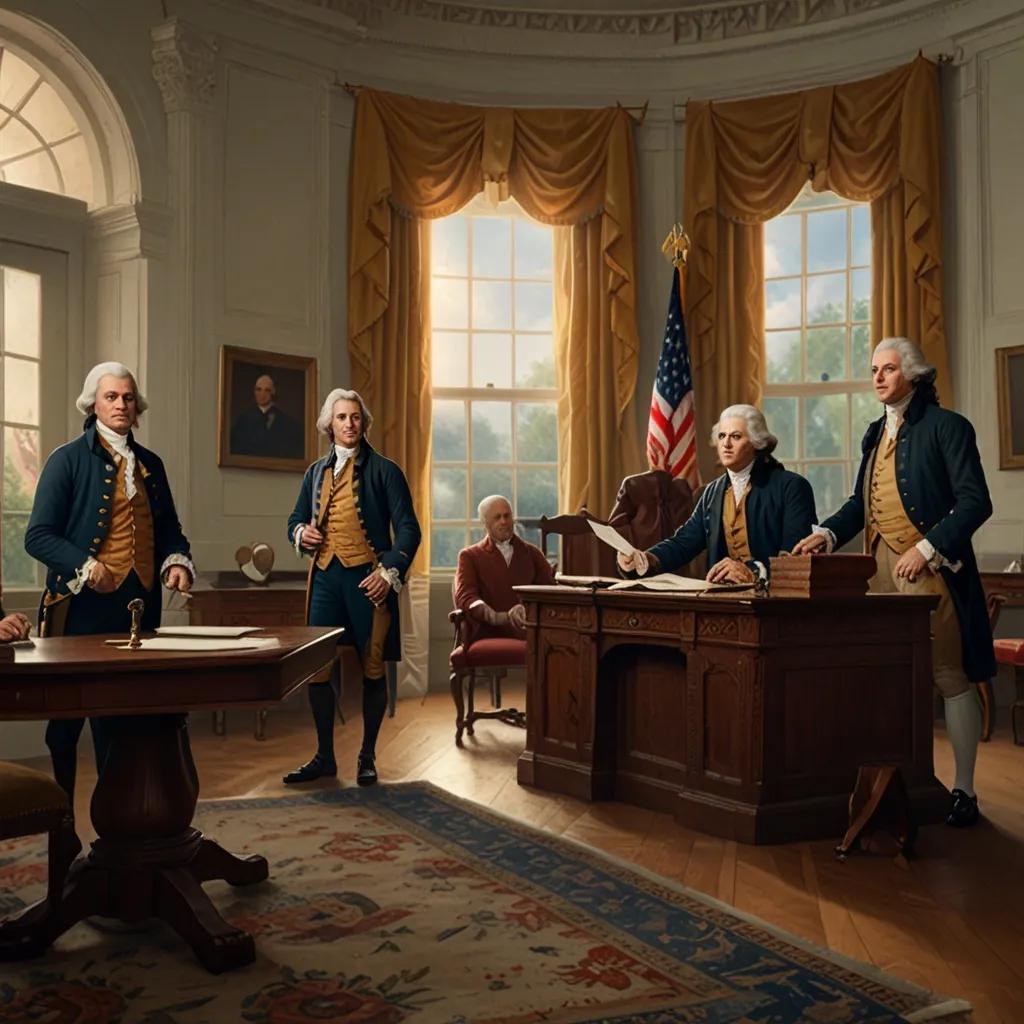
Thomas Jefferson, a young and influential delegate from Virginia, was tasked with drafting this declaration. He worked tirelessly between June 11 and June 28, 1776, to create a document that would not only declare independence but also provide a philosophical justification for it. Jefferson’s draft was reviewed and revised by other members of the Continental Congress, including John Adams and Benjamin Franklin, before it was presented to the full Congress.
On July 4, 1776, the Continental Congress adopted the Declaration of Independence. This document, known as the Dunlap broadside, was printed and distributed widely across the colonies. It was read aloud in public spaces, including Philadelphia, Easton, and Trenton, to inform the public of the momentous decision.
The signing of the Declaration of Independence did not happen immediately. On July 19, 1776, Congress ordered that the document be engrossed on parchment with the title “The Unanimous Declaration of the Thirteen United States of America.” This process involved copying the document in a large, formal hand. The engrossed copy was ready by August 2, 1776, when John Hancock, the president of the Continental Congress, signed it with a bold signature. Over the next few months, the other delegates signed the document, with the last signature being added in November 1776.
The Declaration of Independence had profound implications both domestically and internationally. It formally severed the political ties between the colonies and Great Britain, paving the way for the United States to become a sovereign nation. Internationally, it helped to secure alliances with other countries, most notably France, which provided crucial support during the Revolutionary War.
Today, the Declaration of Independence is celebrated as a foundational document of American history. It is housed in the National Archives in Washington, D.C., where it is viewed by millions of people each year. Its legacy extends beyond American shores, inspiring movements for independence and democracy around the world.
In summary, the Declaration of Independence was signed in the year 1776, marking a significant turning point in American history. This document, crafted by Thomas Jefferson and adopted by the Continental Congress, declared the thirteen colonies’ independence from Great Britain and laid the groundwork for the United States to become a sovereign nation.