Did Rivalry with Ferrari Spark the Birth of Luxury Sports Cars?
From Farmland to Fast Lanes: The Birth of Lamborghini's Competitive Spirit
Previously We explored how an Italian blacksmith named Enzo Ferrari revolutionized the automotive world. This time, we turn our attention to Ferrari’s most famous rival, born out of a desire to prove a point: Lamborghini.
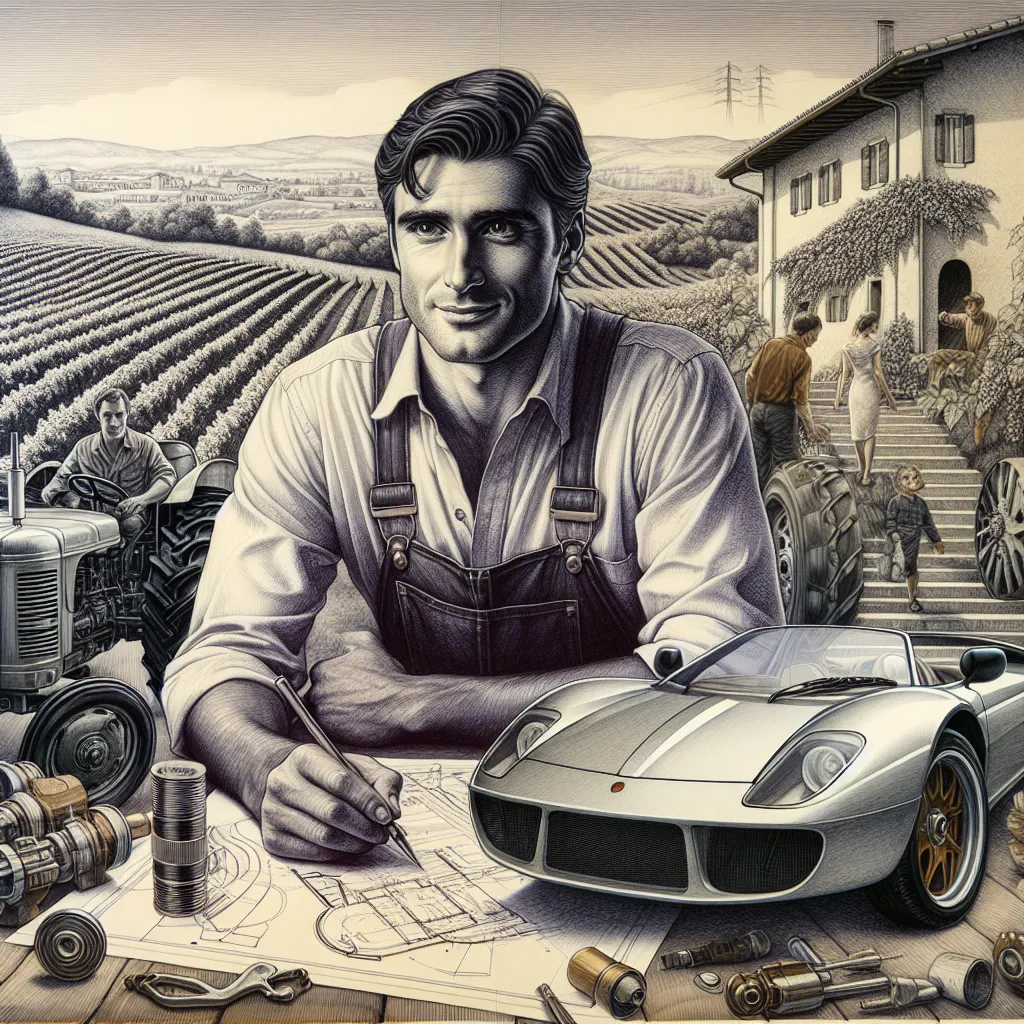
Our story starts in the quiet township of Renazzo di Cento in the northern Italian province of Emilia-Romagna. Here, a young Ferruccio Lamborghini grew up among vineyards, raised by his grape-farming parents, Antonio and Evelina. Despite the hardships of being born during World War I, Ferruccio’s passion for machines was unwavering. He chose mechanical work over farming and by 1935 opened his own workshop.
Ferruccio’s life took a dramatic turn in 1940 when he was drafted into the Royal Italian Air Force during World War II. Stationed on the Greek island of Rhodes, he honed his skills by scrapping and repurposing old machinery. After returning to Italy in 1946, Ferruccio’s experience led him to realize a post-war need for affordable agricultural machinery. By 1947, he had founded his first company dedicated to producing low-cost tractors using surplus military equipment.
Ferruccio’s business ventures blossomed. His first design, the ‘Carioca’ tractor, became a massive success, and by the early 1950s, Lamborghini Trattori was thriving. Despite a brief and eventful stint in racing—including a crash that ended his racing aspirations—Ferruccio continued to innovate in the field of tractors. By the 1960s, his factory employed hundreds and produced up to 30 tractors a day.
Wealth from his thriving business allowed Ferruccio to indulge in his love for sports cars. However, he was often critical of the engineering, particularly the Ferraris he owned, which he found noisy with frequent clutch issues. After a dismissive encounter with Enzo Ferrari himself, Ferruccio decided to build his own luxury sports cars to compete with Ferrari.
By 1963, Automobili Lamborghini was established, marked by the debut of the GT 350. This model impressed critics with its advanced technology, including a V12 engine and independent suspension. The 1966 Miura P400 further revolutionized the industry with its rear mid-engine layout, a design still used in high-performance cars today.
The 1970s brought challenges. A global recession, oil embargo, and internal strikes hit Lamborghini hard. Ferruccio sold parts of his business to keep it afloat and eventually retired. Over the years, Lamborghini changed hands multiple times, from the Mimran brothers to Chrysler, an Indonesian consortium, and finally Volkswagen in 1998.
Under Volkswagen’s guidance, Lamborghini regained its footing. Models like the Gallardo and Huracan rekindled the brand’s legacy, leading to some of their best years in sales. Despite being a corporate hot potato, Lamborghini remains a formidable name in luxury sports cars, consistently challenging Ferrari.
Ferruccio would undoubtedly be proud to see his company today, standing strong and innovating as one of the leading luxury sportscar makers in the world. Lamborghini continues to set benchmarks in the industry, proving that sometimes, rivalry can spawn greatness.